
Body Dysmorphia in the Gay Community: When Appearance Becomes Tied to Self-Worth

Body image struggles are often talked about as if they only exist in the realm of weight, muscles, or attractiveness. In reality, body dysmorphia and body shame can grow from far more complicated places. Sometimes it is about the shape of someone’s body. Sometimes it is about skin conditions, scars, hair loss, aging, disability, or any physical feature that makes a person feel “different” from what they believe they are supposed to look like.
In my work as a therapist, and also through my own experience living with psoriasis, I have come to realize that body image pain is rarely just about appearance. More often, it becomes a relentless internal relationship with perceived flaws, where the mind grows hyperfocused on certain parts of the body and slowly loses the ability to see oneself with balance or compassion.
This can become especially intense in the gay community, where appearance is often placed at the center of identity, desirability, and even belonging. While this does not reflect every gay space or every individual experience, many people silently carry the pressure to look a certain way in order to feel accepted. Lean enough. Muscular enough. Young enough. Clear-skinned enough. Masculine enough. Attractive enough.
Over time, this pressure can create a constant sense of self-surveillance. Instead of simply existing in their bodies, many people begin monitoring themselves from an imagined outside perspective, scanning for flaws, imperfections, or signs that they may not measure up.
What makes body dysmorphia particularly painful is that reassurance rarely fully resolves it. Someone may receive compliments regularly and still feel deeply uncomfortable in their own skin. They may spend hours analyzing photos of themselves, comparing their bodies to others online, avoiding intimacy, or feeling consumed by the possibility that a potential partner will notice the “flaw” they cannot stop thinking about.
For many people, the distress is not vanity, despite how misunderstood body dysmorphia often is. The experience can feel consuming and isolating. A person may intellectually understand that others are not scrutinizing them nearly as harshly as they scrutinize themselves, yet emotionally, the fear and shame still feel real.
For some people, dating apps intensify this experience. Apps often encourage quick judgments based almost entirely on appearance. Over time, this can condition people to evaluate themselves the same way they imagine others do. A delayed reply becomes “I’m not attractive enough.” Being ghosted becomes “Nobody would want someone who looks like me.” Even neutral social experiences can begin to feel emotionally loaded.
Living with psoriasis gave me a more personal understanding of how deeply physical conditions can affect self-esteem and connection. Psoriasis is often misunderstood as “just a skin issue,” but psychologically, it can affect far more than skin. Especially during flare-ups, there can be an overwhelming awareness of being seen. Even when others are not paying attention, the mind may remain hyper-focused on whether people notice the patches, the redness, or the texture. It can create hesitation around dating, physical intimacy, and vulnerability. What made it difficult was not only the condition itself, but the way it changed my relationship with my body. I became far more aware of my skin than I wanted to be. There were moments where I could feel my attention constantly pulled back toward the parts of myself I was trying to hide or mentally correct.
I remember how easy it was to feel disconnected from my own body during periods when symptoms were more visible. There is a specific type of exhaustion that comes from constantly monitoring yourself through the imagined eyes of others. It can make social situations feel performative rather than natural. Instead of being emotionally present, part of the mind remains occupied with self-surveillance.
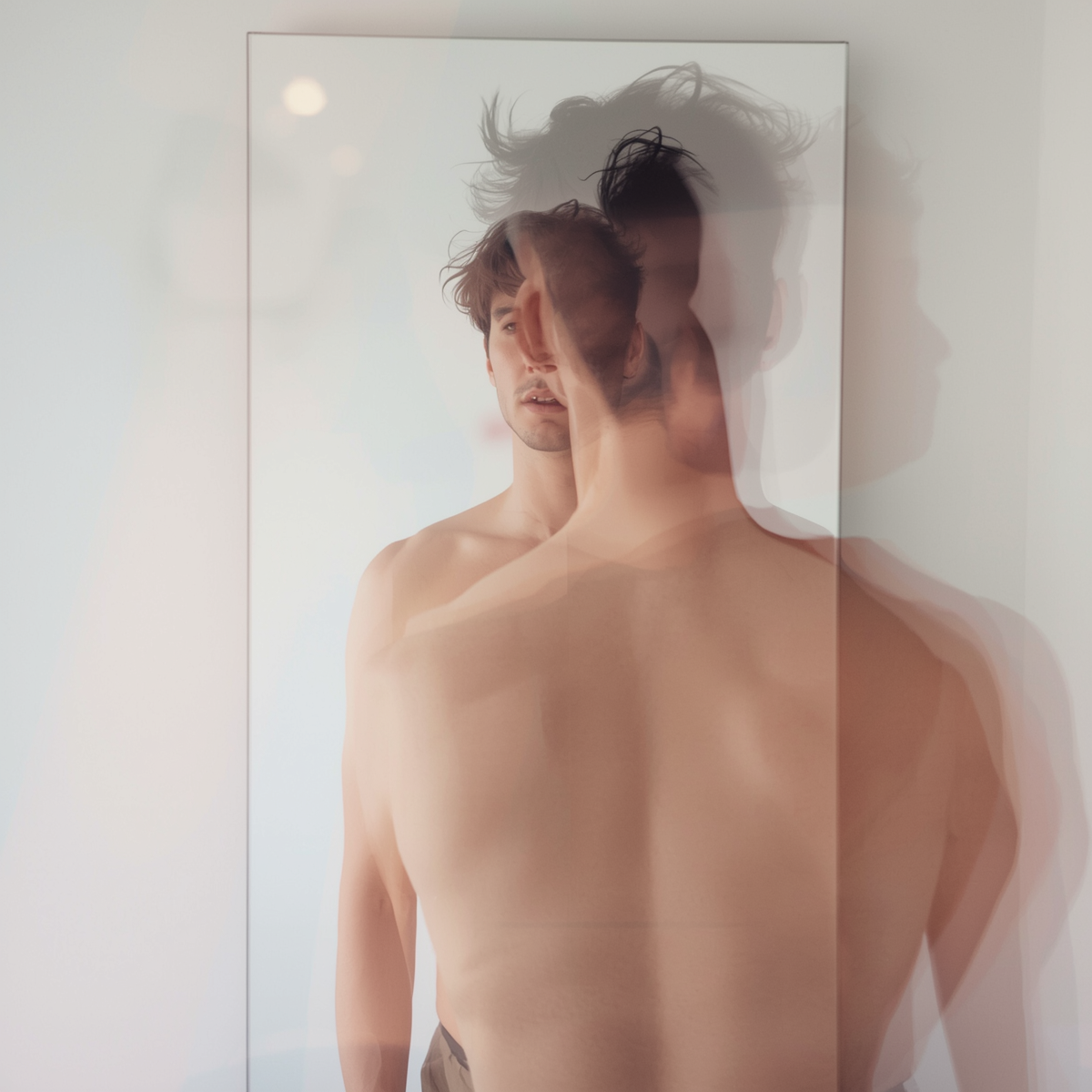
In many gay spaces, where physical appearance can feel highly emphasized, these struggles may become even more amplified. Comparison becomes almost automatic. People may begin measuring their worth against curated images, fitness ideals, or unrealistic expectations around attractiveness and masculinity. Over time, appearance stops feeling like just one part of identity and starts becoming tied to emotional safety, confidence, and belonging.
What many people do not realize is that body dysmorphia is often rooted in much deeper emotional experiences. Shame, bullying, exclusion, loneliness, criticism, or years of feeling “different” can all shape the way someone learns to see themselves. The body then becomes the place where those emotional wounds attach themselves.
This is one reason why some individuals continue pursuing impossible standards even after achieving the appearance they once believed would finally make them feel better. The distress usually does not disappear simply because the body changes. The deeper struggle is often the inability to feel at peace within oneself.
In therapy, one of the goals is not to convince someone that appearance does not matter at all. That would feel dismissive and unrealistic. Attraction is part of human experience. We all want to feel desired and accepted. The deeper work is helping someone separate their worth from constant self-measurement. It is learning how to exist in relationships without feeling as though love must first be earned through perfection. Healing from body dysmorphia rarely happens through suddenly loving every part of oneself. More often, it begins through reducing the hostility toward the body. Through becoming less consumed by comparison. Through noticing how much emotional energy has been spent trying to become “acceptable” before allowing oneself to feel confident, connected, or enough.
For many gay men especially, there can also be grief underneath body image struggles. Grief over years spent criticizing themselves. Grief over missed experiences because they felt too ashamed to be seen. Grief over how much of life became organized around hiding, correcting, or controlling appearance.
The people I see making the deepest progress are usually not the ones who completely eliminate insecurity. They are the ones who slowly stop organizing their entire sense of self around perceived imperfections. Instead of asking, “How do I finally become flawless?” the work gradually becomes, “How do I live more freely even while feeling imperfect sometimes?”
If you have been struggling with body image, psoriasis, or the feeling that your appearance has become tied to your sense of worth, you are far from alone. These experiences are far more common than most people admit openly. And beneath the surface, many people who appear confident are carrying similar struggles themselves.
Sometimes healing starts with finally having a space where you no longer have to hide how much this has been affecting you.