
Thinking About an Open Relationship or CNM? Here’s What Often Comes Up
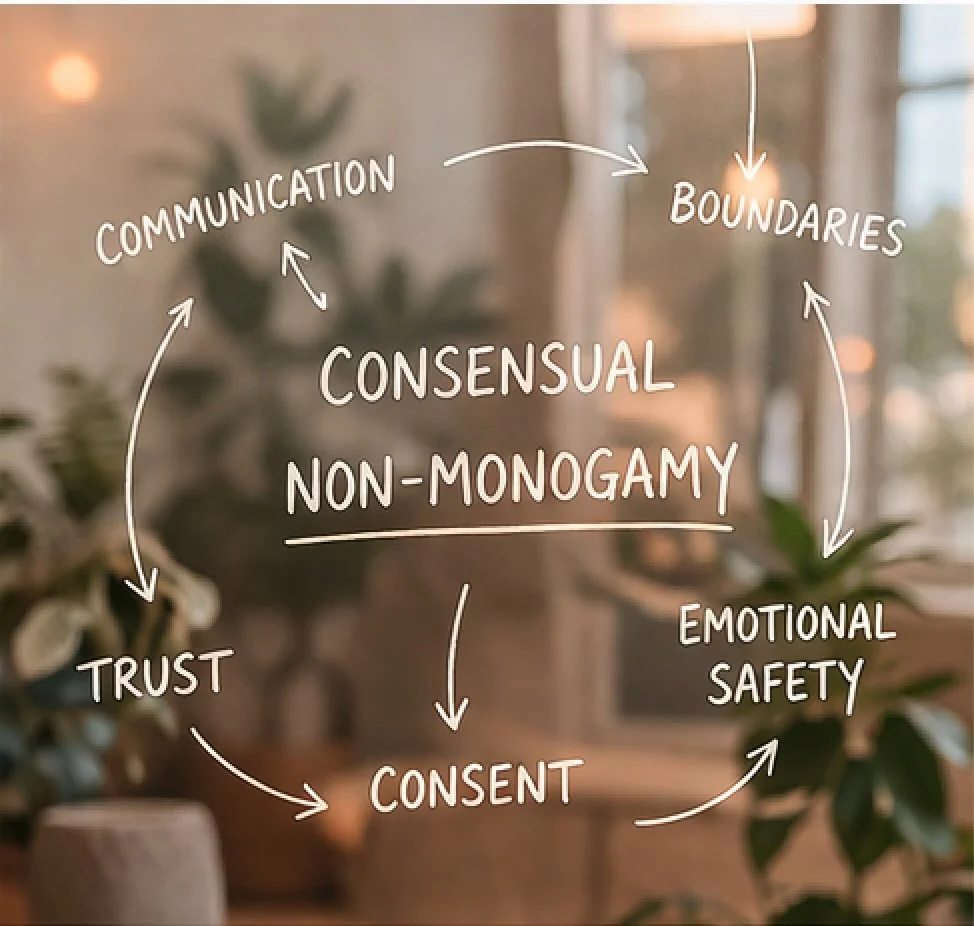
Most people don’t just wake up one day and decide on open-relationship or Consensual non-monogamy (CNM) randomly and people don’t usually walk into therapy saying, “ I want an open relationship just because…” There’s almost always a deeper story underneath it, something about how they experience connection, freedom, or even fear. A need, a value, sometimes even a quiet tension that’s been there for a while.
For some people, it’s about freedom and the desire for autonomy. Not in a “I don’t want to commit” way, but more like they don’t experience love as something that has to be exclusive to feel real. They can deeply feel connected to and love their partner and still feel that having the freedom to feel connected with others, emotionally, intellectually, or physically, which fits more authentically with who they are.
There are people who come to it from a place of curiosity. They may not have fully explored their identity earlier in life before entering long-term relationships, whether that’s sexual, emotional, or relational. As they grow, there can be a quiet questioning “Is there more to me that I haven’t experienced yet?” An open relationship can feel like a way to explore the question without having to give up a stable, meaningful partnership. For instance, someone might want to explore attractions to different genders, or experience different emotional dynamics that their current relationship doesn’t naturally provide. In these cases, the openness is less about dissatisfaction and more about expansion of self.
Some practical and relational reasons can also lead couples to consider non-monogamy. Some couples experience mismatched needs, especially around intimacy. One partner may have higher libido or different sexual preferences that the other doesn’t share. Instead of framing these differences as incompatibilities that must end the relationship, some couples explore whether opening the relationship can feel like a way to meet those needs without forcing either person to change who they are.
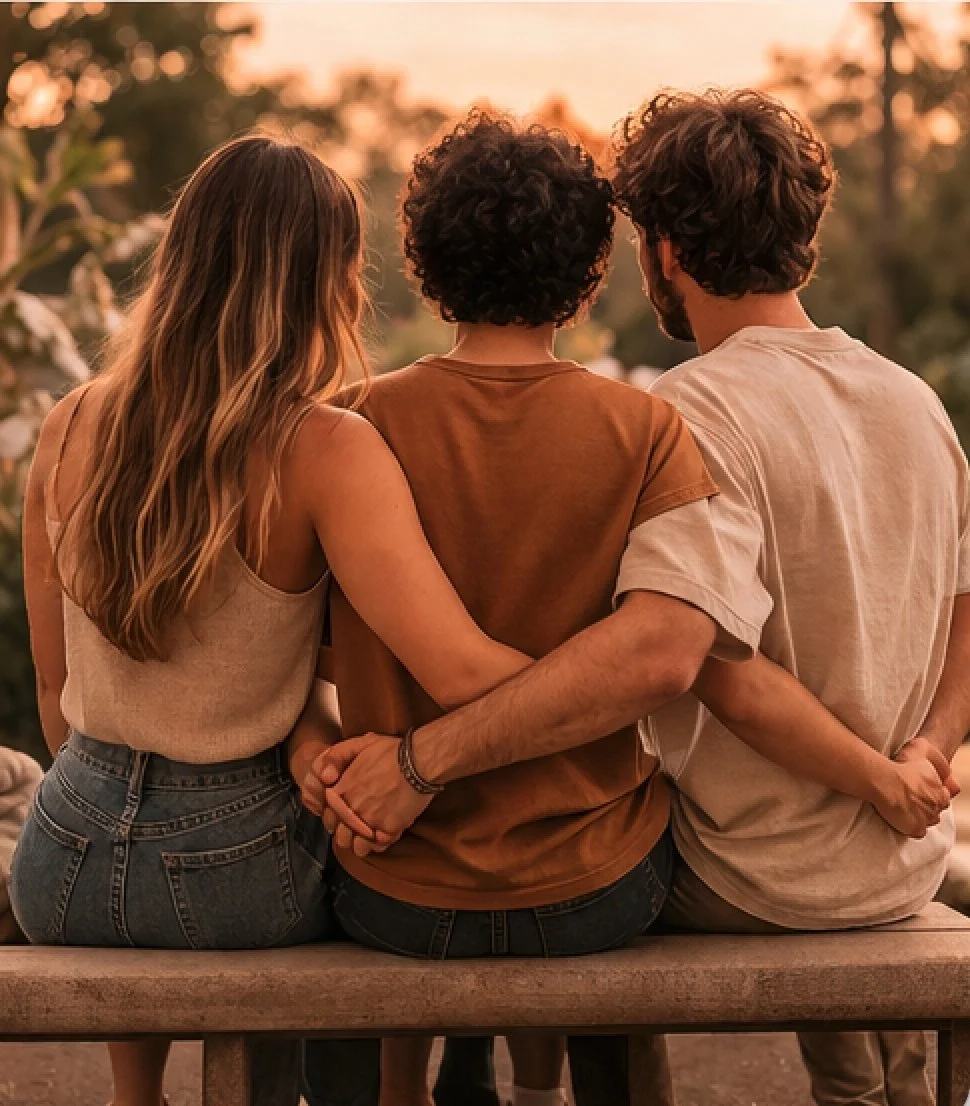
Open relationships can also be rooted in deeply held values or philosophies about love. Some people genuinely believe that love isn’t limited. Caring for more than one person and forming multiple meaningful connections doesn’t diminish the importance of any one relationship. Often, they place a strong emphasis on honesty, transparency, and see non-monogamy as a more authentic way of relating.
However, not all motivations are that clear-cut.
Sometimes, open relationships are less about desire and more about avoidance. There might be issues already there, such as distance, conflict, things that haven’t really been talked about. Opening things up can take the pressure off in the short term, but it doesn’t usually resolve what’s underneath. If anything, it can make those things more visible later on.
Another dynamic that shows up a lot is uneven buy-in. One person is clearly more into the idea, and the other is trying to be okay with it. They might say yes because they don’t want to lose the relationship, or because they feel like they should be “open-minded” about it. That “should” tends to catch up with them eventually.
There is also the element of novelty and excitement. New connections can feel exciting, especially if the relationship has settled into a routine. It can bring a renewed sense of energy, new conversations, new experiences, and a feeling of rediscovery. It can temporarily shift the dynamic from routine to something more alive. However, novelty is not a stable foundation on its own. When the initial excitement fades, couples are often left with whatever was already there before.
A less obvious, but important, factor is social and cultural context. While open relationships are becoming more normalized in certain spaces and communities, there is still a significant amount of stigma. Many clients feel that they cannot openly talk about their relationship structure with friends, family, or colleagues. This lack of external support can make it harder to process challenges. They may feel isolated, or unsure where to turn for perspective in daily life. When something feels off, therapy ends up being one of the only places where they can actually say things out loud without worrying about how it’s going to be received.
Another thing that doesn’t get talked about enough is the internal conflict some people feel. I have encountered individuals who really believe in the idea of open relationships. It fit their values. They want to be the kind of person who feels secure and non-possessive. However, emotionally, it’s a different story. They feel anxious when their partner is out with someone else longer than usual. They compare, they overthink, and then they judge themselves for having those reactions. The gap between “what someone thinks they should feel” and “what they actually feel” can be surprisingly hard to sit with.
From a therapeutic perspective, the goal is not to evaluate whether open relationships or CNMs are “good” or “bad.” Open relationship ask for a lot, especially in terms of communication, self-awareness, and emotional honesty. The focus should be on alignment, consent, and emotional sustainability. For instance, are both partners genuinely on board, not just in theory but in practice? Do they feel safe expressing discomfort without fear of losing the relationship? Are their motivations rooted in authenticity, or are they compensating for something else? When communicating about the idea, the partners should emphasize on exploring each other’s understanding over the boundaries and agreements, such as what’s ok and not ok, emotionally, physically, and relationally. Noted that they can evolve over time, which requires ongoing communication.
Open relationship tends to amplify things too. If there’s trust, it becomes even more important. If there’s insecurity, it usually become even more visible. If communication is already a bit shaky, it can start feeling overwhelming fairly quickly.
Therapy often offers such a valuable space for individuals and couples navigating non-monogamy. It offers the opportunity to slow things down, explore motivations more deeply, and build the emotional tools needed to navigate complexity with more clarity. So the questions I often come back to with clients is not simply, “Does this work for you?”, but rather, “does this work for you, in a way that feels sustainable and honest?” Because at the end of the day, the structure of a relationship matters less than the experience of the people within it.