

Therapy For Anxiety
Downtown Edmonton · Virtual Therapy Across Canada
Separation Anxiety Disorder
|
Selective Mutism
|
Specific Phobia
|
Social Anxiety Disorder
|
Panic Disorder
|
Agoraphobia
|
Generalized Anxiety Disorder (GAD)
|
Medication-Induced Anxiety Disorder
|
Other Specified Anxiety Disorder
|
Separation Anxiety Disorder | Selective Mutism | Specific Phobia | Social Anxiety Disorder | Panic Disorder | Agoraphobia | Generalized Anxiety Disorder (GAD) | Medication-Induced Anxiety Disorder | Other Specified Anxiety Disorder |

Anxiety Is Not One Problem.
Therapy Should Not Treat It Like One.
Constant Worry; Panic; Fear of Judgment; Avoidance; Relationship Anxiety.
Anxiety can look similar from the outside while being driven by very different fears.
Which Version of Anxiety Feels Familiar?
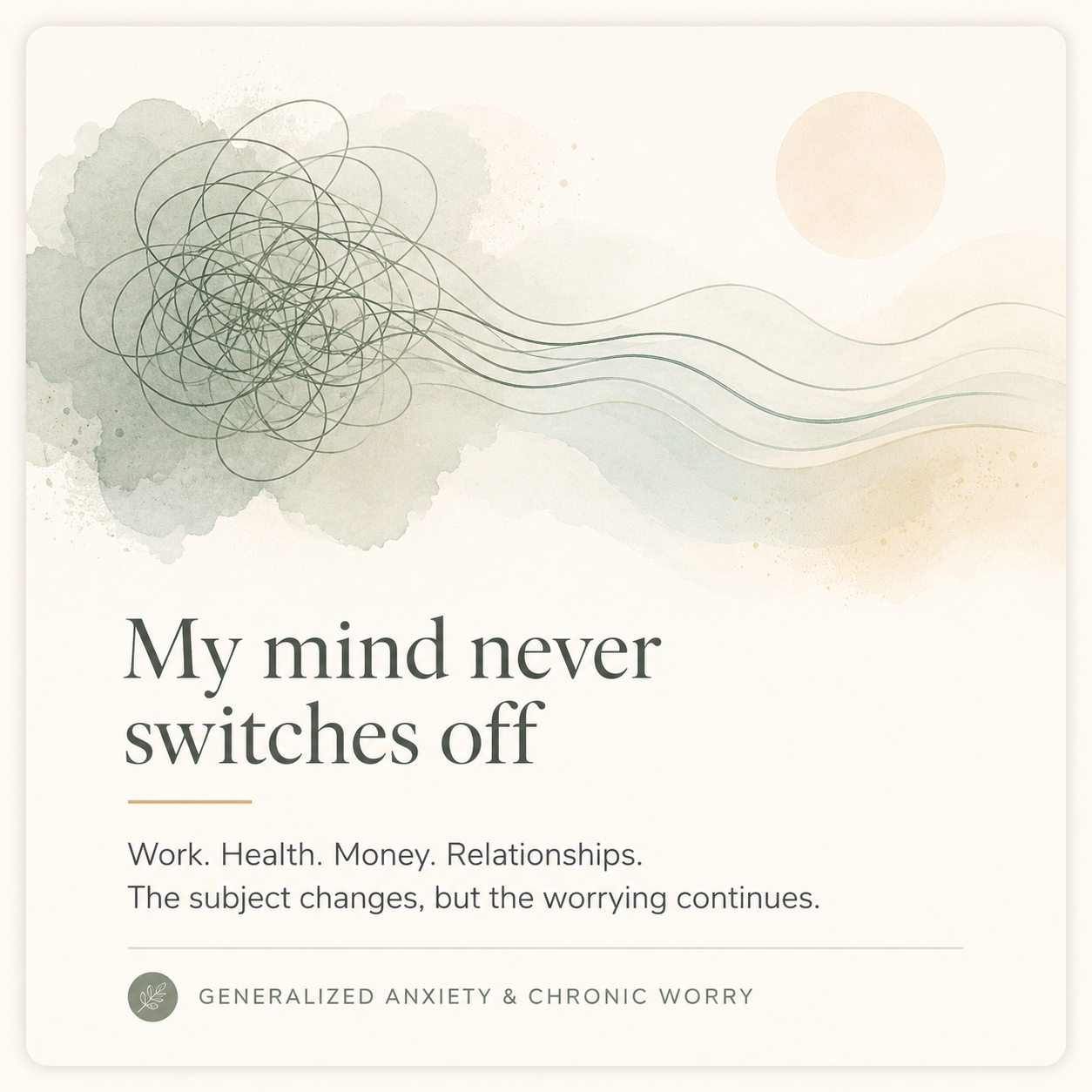
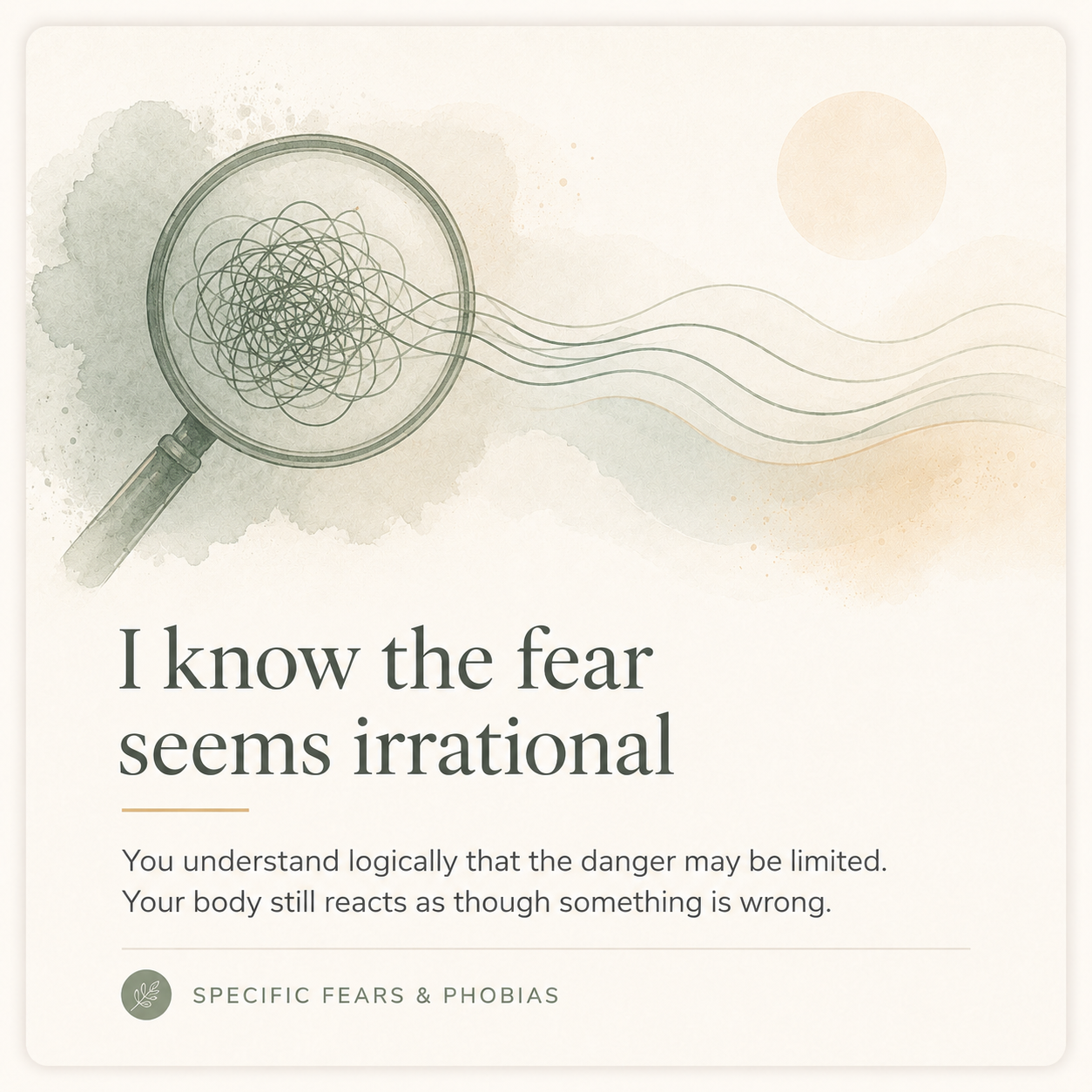
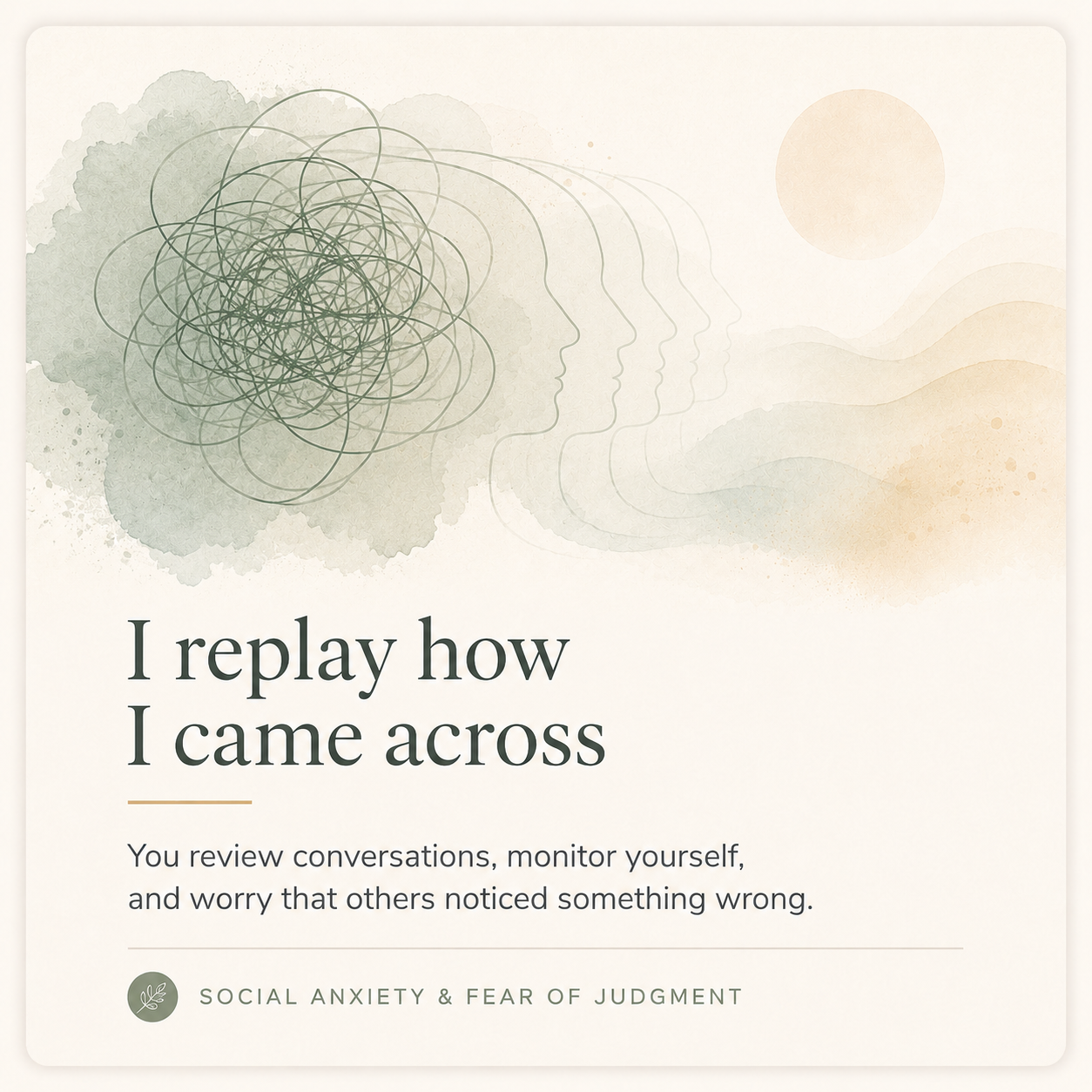
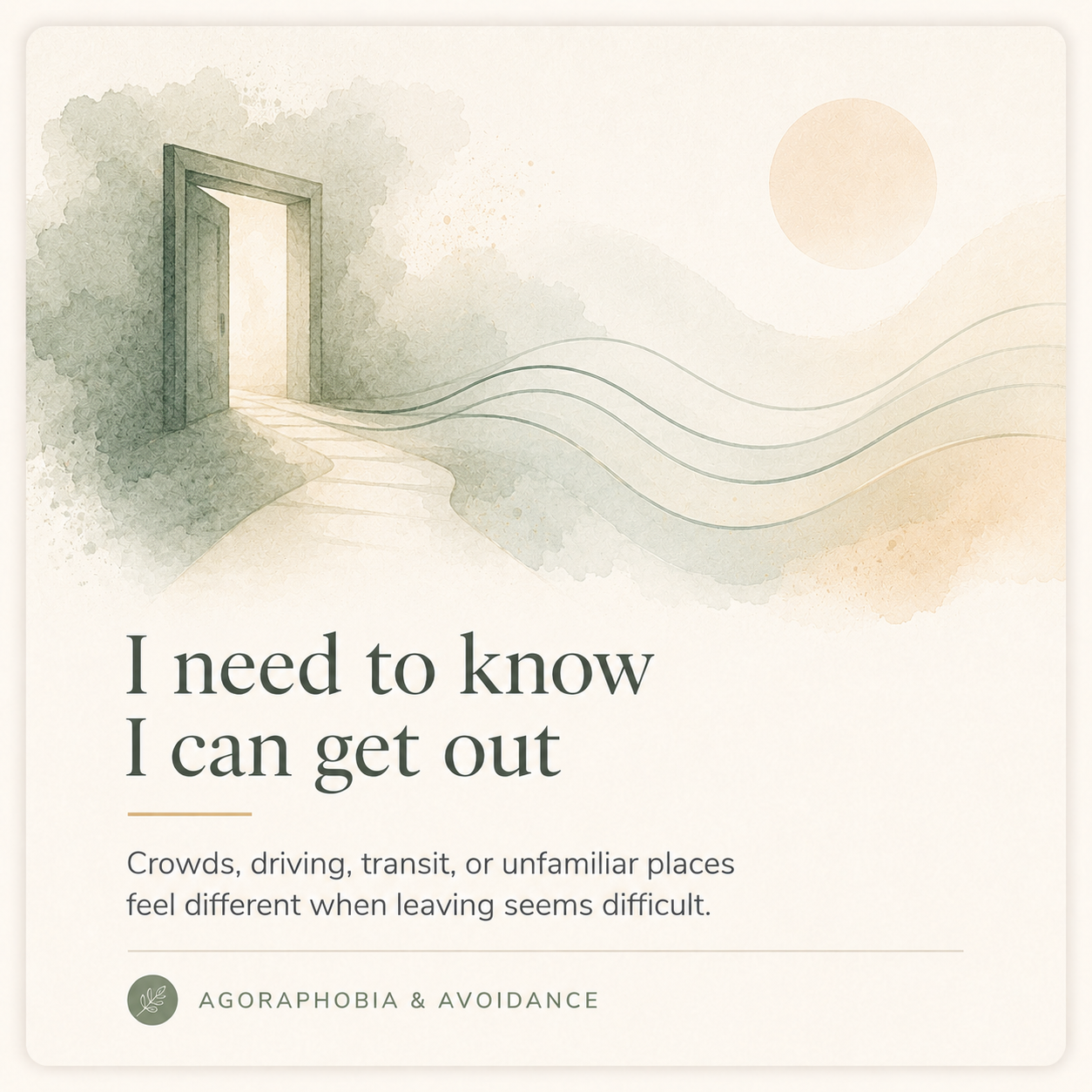

You may already know you have anxiety.
The question I am more interested in is:
“What has your anxiety learned to be afraid of?”
WHY ANXIETY KEEPS COMING BACK
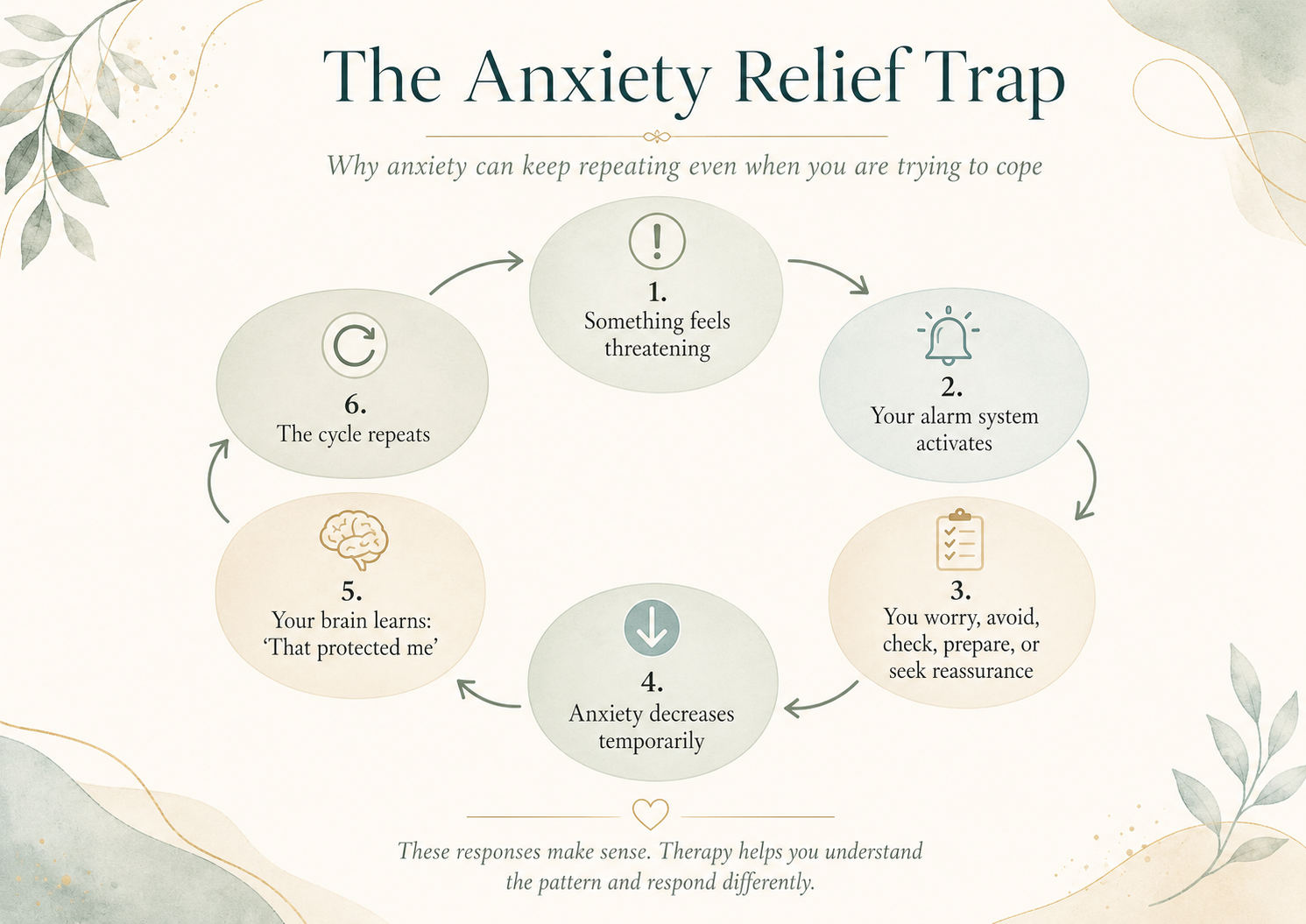
Anxiety is part of your body's threat system. It is designed to notice possible danger and help you respond quickly.
The difficulty is that the alarm system can also react to uncertainty, rejection, unfamiliar body sensations, making a mistake, losing control, or not knowing what happens next.
When anxiety rises, you may:
overthink · avoid · check · prepare · seek reassurance · monitor your body
These responses often make sense. They may also bring temporary relief.
But when something lowers anxiety quickly, your brain can learn:
“That kept me safe. Do it again next time.”
Over time, this can strengthen the anxiety cycle.
So, Where Do We Start?
CALM THE ALARM
When anxiety is intense, thinking clearly can be difficult.
We may use grounding, sensory strategies, mindfulness, or emotional regulation skills to help you stay present enough to work with what is happening.
INTERRUPT THE CYCLE
We look at worry, avoidance, checking, reassurance seeking, and the patterns that provide temporary relief but may keep anxiety going.
CBT, ACT, DBT, and behavioural strategies may become useful here.
UNDERSTAND WHAT IS UNDERNEATH
Sometimes anxiety is connected to shame, attachment, self-criticism, perfectionism, or experiences that taught you to stay prepared.
This is where our work may become more emotion-focused and attachment-informed.
What Our Sessions Look Like

At our clinic, therapy is not about sitting quietly while you try to figure everything out on your own.
You will have space to talk through your experiences and understand what has been happening. We may also ask specific questions, point out patterns, and gently bring attention to the ways anxiety keeps pulling you into the same cycle.
You do not need to know your diagnosis or explain everything perfectly.
Sometimes, “I can't stop thinking about it” is enough of a place to start.

Understanding Your Anxiety in A Context
Not every fear is irrational.
Your culture, identity, relationships, family expectations, and experiences of being judged or misunderstood can all shape how safe you feel.
At our clinic, we are careful not to automatically treat every anxious thought as a distortion that needs to be challenged.
For immigrant, BIPOC, and LGBTQ+ clients, anxiety may also be influenced by minority stress, cultural pressure, discrimination, or an ongoing question of where you feel accepted and able to be yourself.
Therapy can acknowledge these realities while helping you notice when anxiety has started taking more control over your life than you want it to.

Maybe nothing looks obviously wrong from the outside.
You are still working, showing up, replying to people, and getting through your day.
But your mind is tired.
If you are tired of replaying, preparing, worrying, or trying to calm yourself down alone, you are welcome to talk with us.
You do not need the perfect words. Just come as you are.
—— HouseYourMind Counselling & Psychology