
STRESS & BURNOUT THERAPY

You can keep functioning and still be running out of capacity.
You do not have to wait for a breakdown before stress deserves attention
Downtown Edmonton | Virtual Therapy Across Canada
When Life has required too much from you for too long.
You show up. You take care of what needs to be handled. You get the job done. You respond when people need you. You keep thinking ahead.
Maybe the pressure comes from work. Maybe it is parenting, caregiving, relationships, family expectations, or several of them at once. From the outside, you may seem capable and dependable. Inside, there may be very little of you left over.
Sometimes it looks like carrying on.
BURNOUT DOES NOT ALWAYS LOOK LIKE COLLAPSE
Some people reach a point where they cannot keep going. Others keep going for months, or years, while becoming increasingly exhausted, irritable, numb, disconnected, anxious, or unlike themselves.
Sometimes the first sign is not that you stopped functioning. It is realizing how much energy functioning now requires and how little seems to remain for you afterward.
BODY:
Tired, tense, but rarely fully off.
SELF:
Everyone gets a piece of you except you.
MIND:
Always anticipating what comes next.
EMOTION:
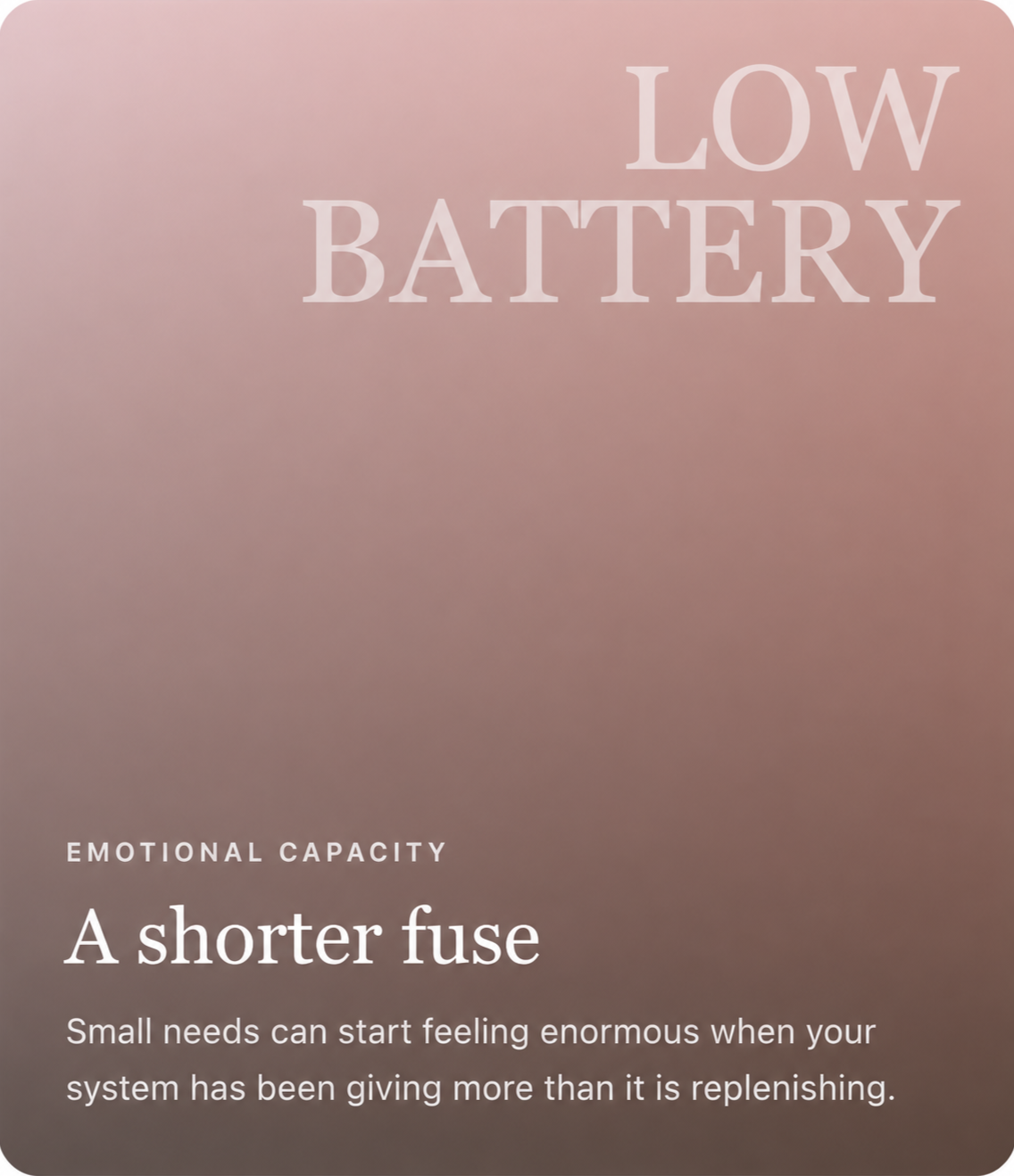
A shorter fuse or hardly feeling much at all.
Burnout can grow from more than one kind of responsibility.
WHAT HAVE YOU BEEN CARRYING?
The source is not always a job. Sometimes several ordinary responsibilities accumulate until there is no real recovery between them.
Work & Performance
Deadlines, leadership, difficult environment, perfectionism, overwork, or feeling like you always have to be available.
Relationships
Carrying conflict, emotional labour, accommodating others, keeping the peace, or being the person who holds everything together.
Caregiving
Caring for an aging parent, ill partner, family member with a disability, or someone who needs ongoing practical or emotional support.
Family & Cultural Roles
Being the responsible one, provider, translator, helper, successful child, mediator, or person expected to sacrifice without complaint.
Parenting
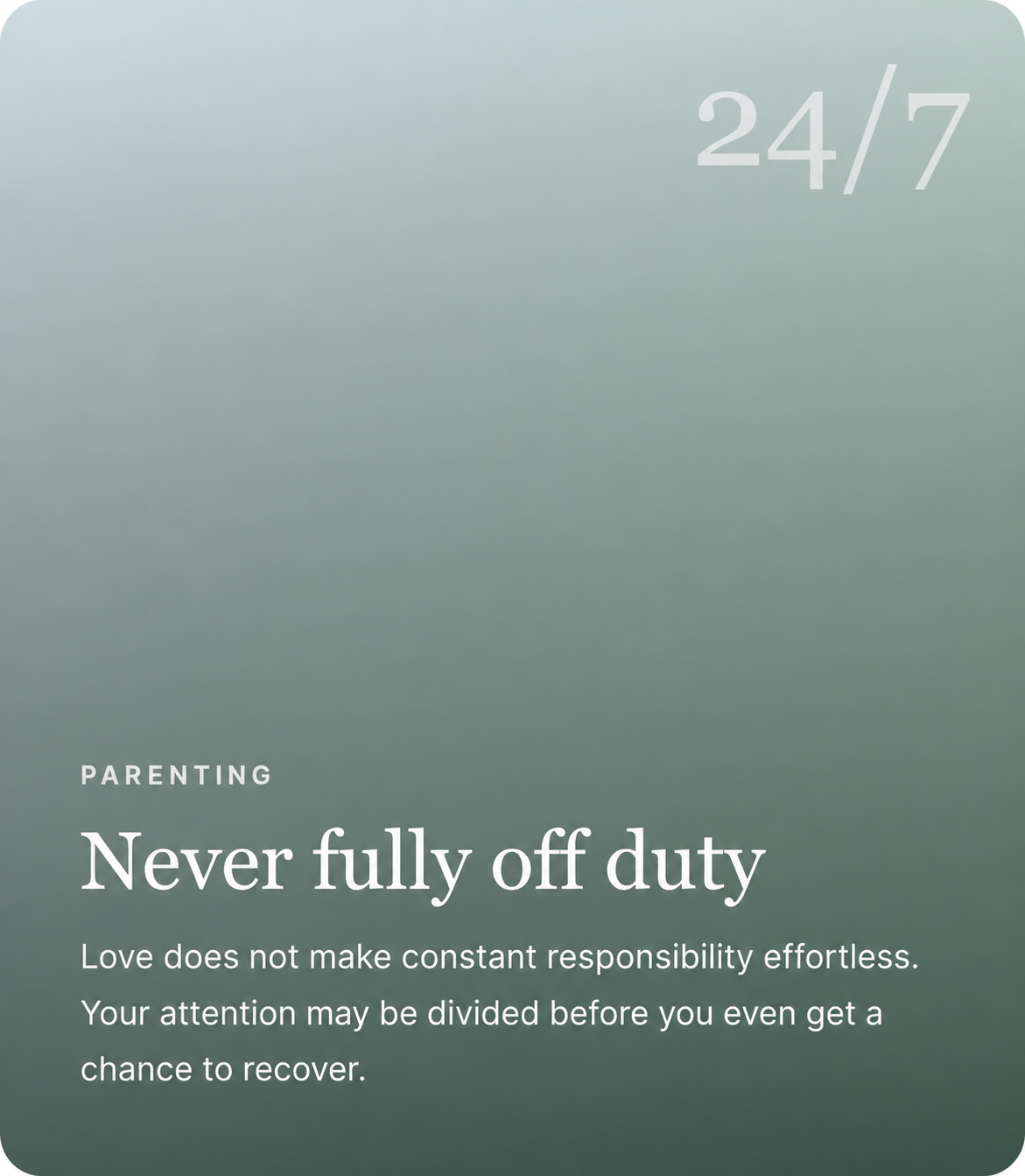
Planning, worrying, organizing, responding, regulating, and rarely reaching a point when nobody needs something from you.
Chronic Life Stress
Financial pressure, health concerns, transitions, isolation, uncertainty, and many smaller demands that never quite stop.
WHEN CARING STARTS COSTING MORE THAN YOU HAVE AVAILABLE
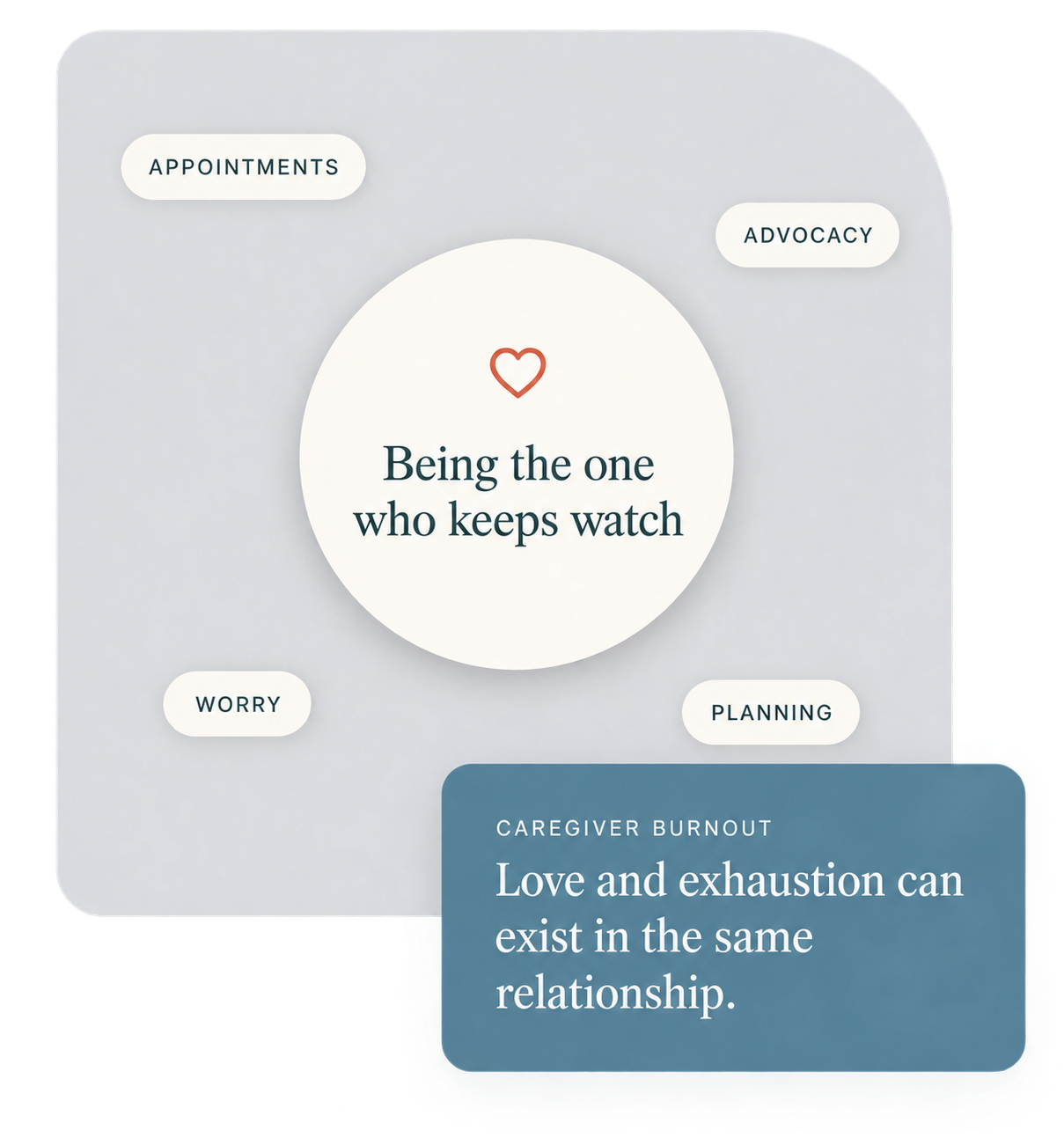
Being needed can become exhausting, even when you deeply care.
Caregiving may mean supporting a child, partner, parent, or family member with illness, disability, higher support needs, or changing health.
You may be arranging appointments, monitoring symptoms, handling practical tasks, worrying about what could happen next, advocating, reassuring, and trying to stay emotionally strong for everyone else.
“I need a break from being needed.”
“I feel guilty when I want time for myself.”
“I am getting irritated with someone I love.”
“Nobody seems to notice how much I am carrying.”
Therapy can make room for both sides: the part of you that cares deeply and the part that is tired, frustrated, grieving, angry, or simply running out of capacity.
You do not have to choose between caring about someone else and acknowledging what caring has been costing you.
STRESS & BURNOUT IN EVERYDAY LIFE
The day may end. The responsibility doesn’t.
Burnout often shows up in the spaces between roles. Your body is home but your mind is still solving, anticipating, or recovering.


WHEN YOU CANNOT SIMPLY “SET A BOUNDARY AND WALK AWAY”
Some responsibilities are real. Therapy should respect that.

A caregiver cannot always say no. A parent cannot simply stop parenting. A difficult financial or cultural reality cannot be solved by a wellness routine.
01 Find the boundaries that are actually possible.
Internal boundaries, communication, redistribution of responsibility, asking for specific support, and tolerating the discomfort of not doing anything.
02 Make space for complicated emotions.
Resentment, grief, guilt, relief, frustration, love, and tenderness can coexist without one cancelling out another.
03 Protect some sense of self.
We can look for small ways your identity, relationships, pleasure, rest, and values do not disappear entirely inside the role you are carrying.
HOW THERAPY MAY HELP
Not by making you better at tolerating an unsustainable life.
The work is to understand what is draining you, help your system regain some capacity, and create changes that are realistic enough to live with.

01 Understand your actual stress cycle
What activates the pressure? What happens in your body and thoughts? Where do guilt, urgency, avoidance, or over-responsibility enter the pattern?
02 Help Your nervous system come out of constant urgency
Grounding, mindfulness, sensory strategies, DBT skills, breathing, movement, and psychoeducation can help us experiment with ways of shifting states.
03 Work with perfectionism, guilt & over-responsibility
CBT, ACT, compassion-focused and parts-informed work can help us understand the rules that keep you over-functioning and what they have been protecting.
04 Make support and boundaries more usable
We can practice asking, delegating, communicating, tolerating other people’s reactions, and differentiating caring from carrying everything.
05 Rebuild capacity without another self-improvement project
Recovery does not need to become another checklist. We experiment with small changes and pay attention to what genuinely restores rather than what you “should” be doing.
06 Reconnect with the parts of life that disappeared
Your life is more than being useful. We make room for identity, connection, play, intimacy, meaning, curiosity, and what matters beyond responsibility.
WHAT OUR SESSIONS LOOK LIKE

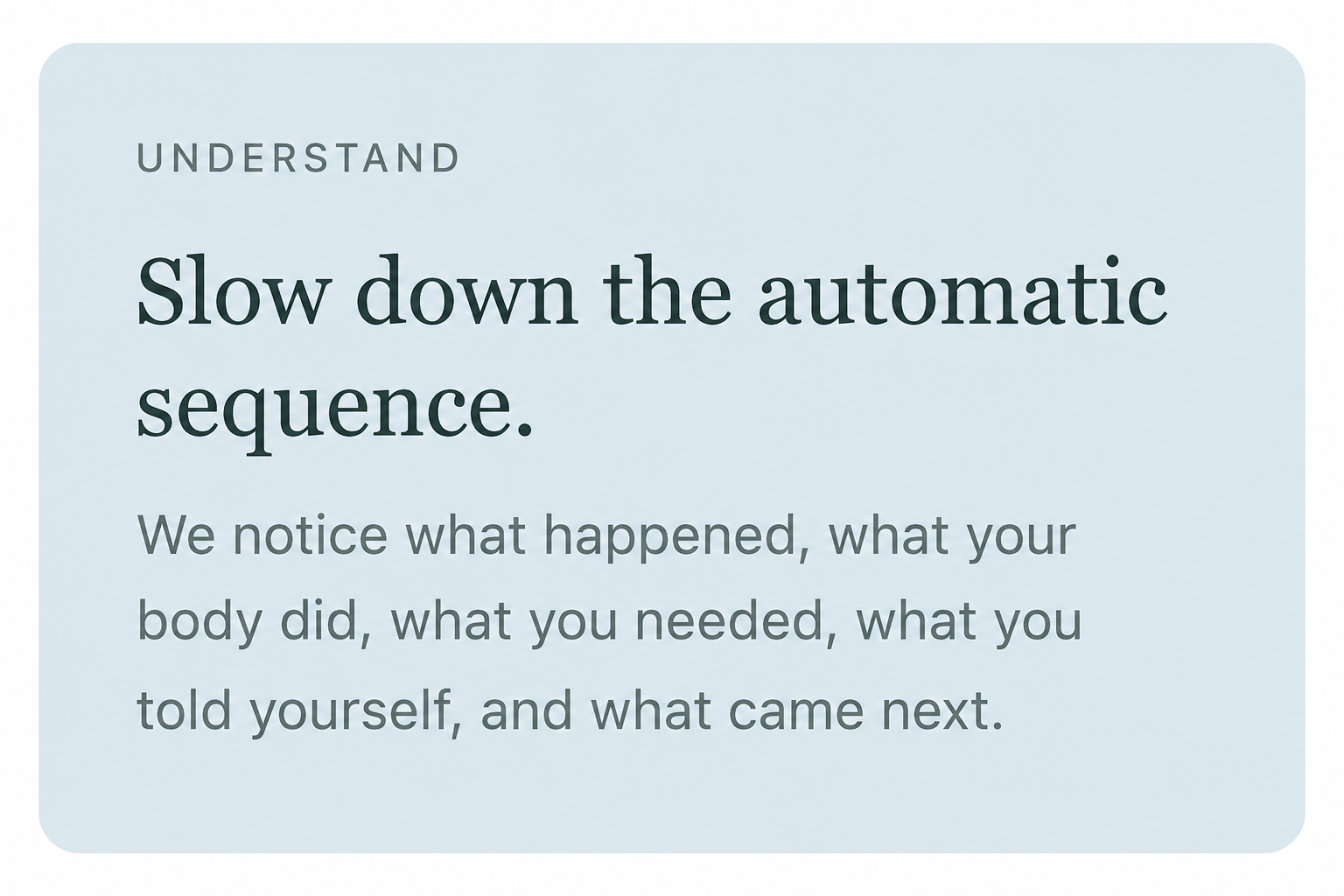
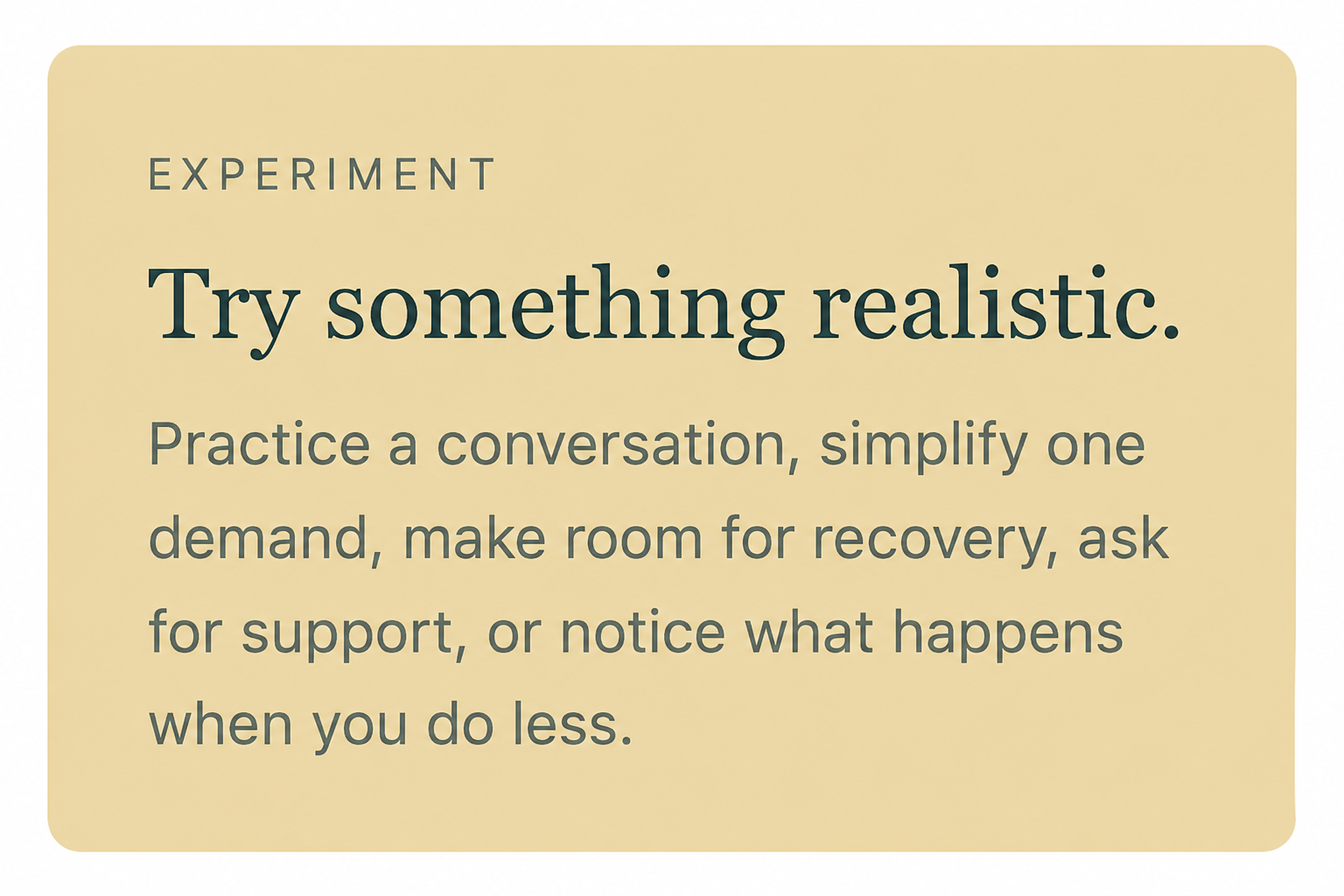
Collaborative, grounded, and practical without turning therapy into another thing to perform well at.

FLEXIBLE, INTEGRATIVE THERAPY
We use approaches to fit the person, not the other way around.
A note about work-related stress and psychological injury: If your concerns appear to involve a work-related psychological injury, Alberta WCB legislation may require your psychologist to submit a report to WCB as part of their professional reporting obligations. This may apply to psychological injuries related to traumatic workplace events or significant/chronic workplace stressors.
Please see the attached WCB-Alberta policy for more detailed information about reporting requirements and how psychological injury claims are considered.
FREQUENTLY ASKED QUESTIONS
A few things you may be wondering.
-
The term “burnout” is formally used in relation to chronic workplace stress, but people also commonly describe emotional depletion connected to parenting, caregiving, relationship, family responsibilities, or prolonged life stress. In therapy, we do not need to force your experience into one label before exploring what is happening.
-
That can absolutely be part of our work. Caregiver stress may involve practical overload, guilt, resentment, anticipatory grief, changing family roles, feeling constantly needed, and losing space for yourself. We can work with both emotional impact and what is realistically changeable.
-
Then therapy should not pretend that a simple boundary will fix it. We can focus on the boundaries that are possible, emotional processing, asking for support, redistributing what can be redistributed, preserving capacity, and making room for your own needs without denying the reality of the responsibility.
-
There can be substantial overlap. Therapy can help us explore your patterns and context while staying open to other contributors. When medical assessment or another form of care may be important, that can be discussed as part of the broader picture.
-
No. You can seek support while you are still functioning. In fact, many people come because they can keep going but no longer like what keeping going is costing them.

YOU CAN COME WITH THE MESSY VERSION
You don’t have to earn a breakdown before you’re allowed to slow down.
Maybe you are not sure whether “burnout” is the right word. That’s okay. We can begin with the part you do know: something has been taking too much out of you lately.