

Therapy For Depression
Downtown Edmonton | Virtual Therapy Across Canada

Depression often pulls us away from many people and things in life.
Therapy can become a place to slowly reconnect with them.
Low Mood; Numbness; Exhaustion; Irritability; Isolation; Loss of Meaning.
Major Depressive Disorder
|
Persistent Depressive Disorder
|
Seasonal Depression
|
Perinatal Depression
|
Premenstrual Dysphoric Disorder
|
Substance/Meditation-Induced Depressive Disorder
|
Medical Condition Related Depressive Disorder
|
Other Specified Depressive Disorder
|
Unspecified Depressive Disorder
|
Major Depressive Disorder | Persistent Depressive Disorder | Seasonal Depression | Perinatal Depression | Premenstrual Dysphoric Disorder | Substance/Meditation-Induced Depressive Disorder | Medical Condition Related Depressive Disorder | Other Specified Depressive Disorder | Unspecified Depressive Disorder |
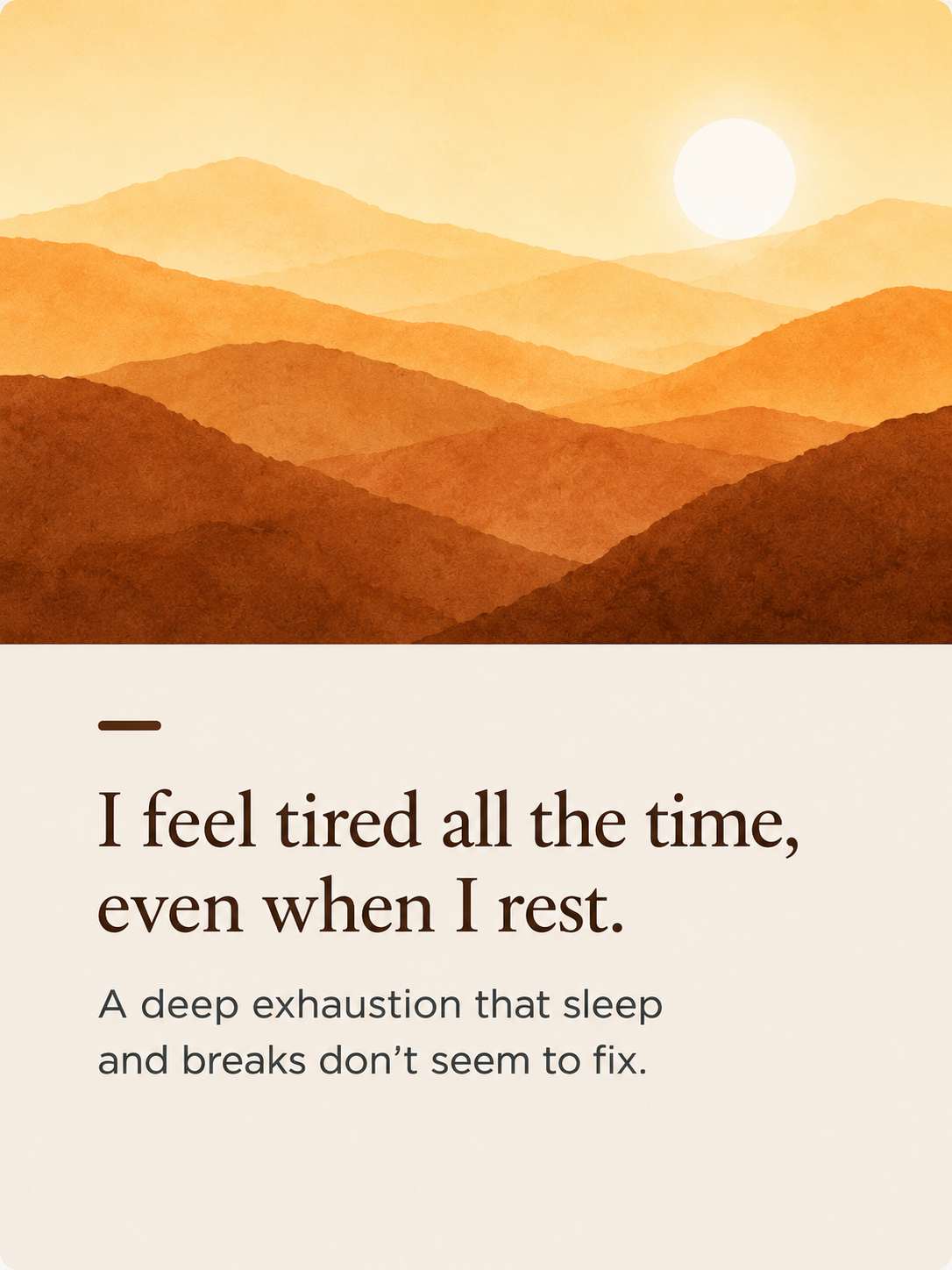
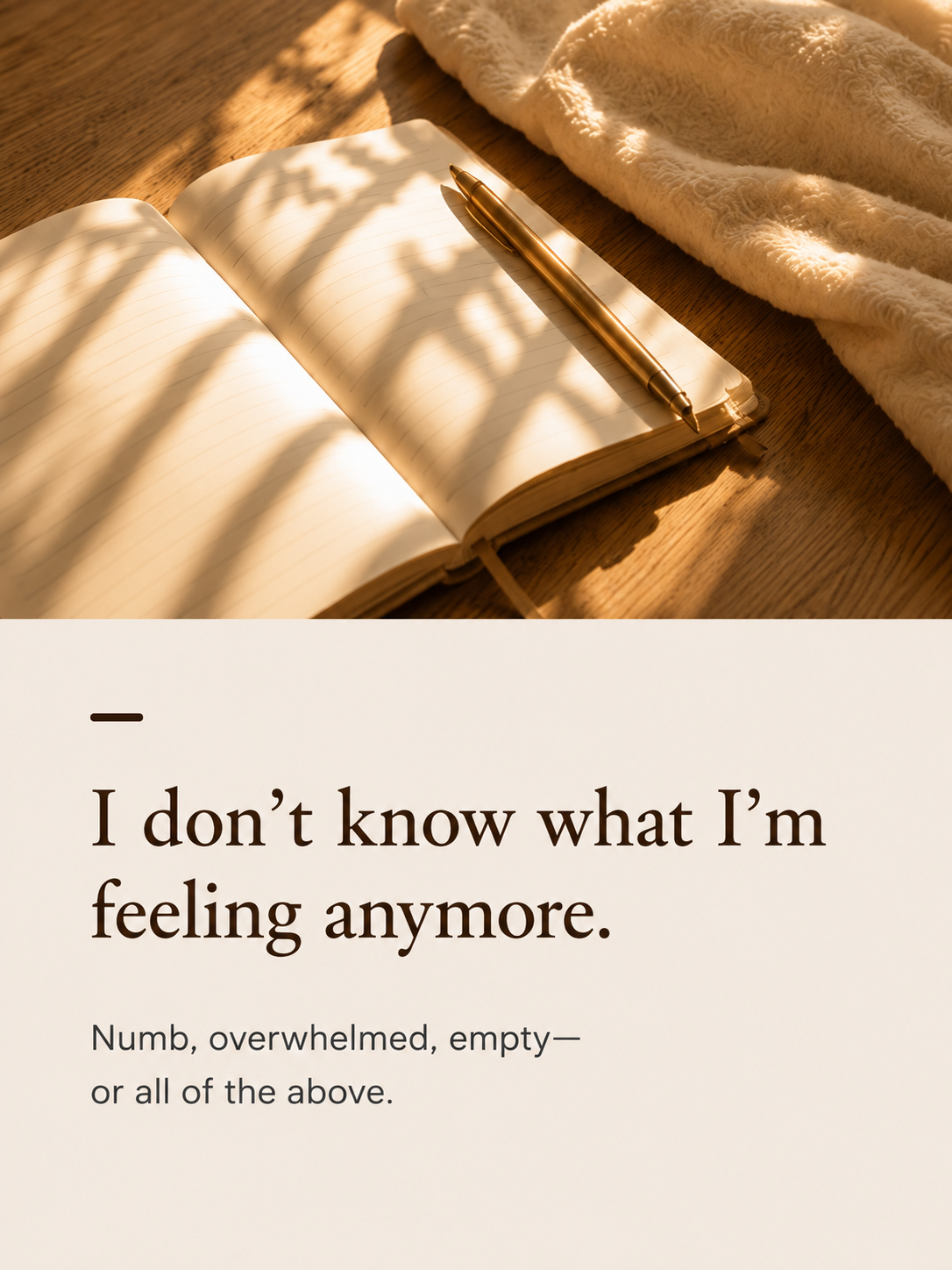
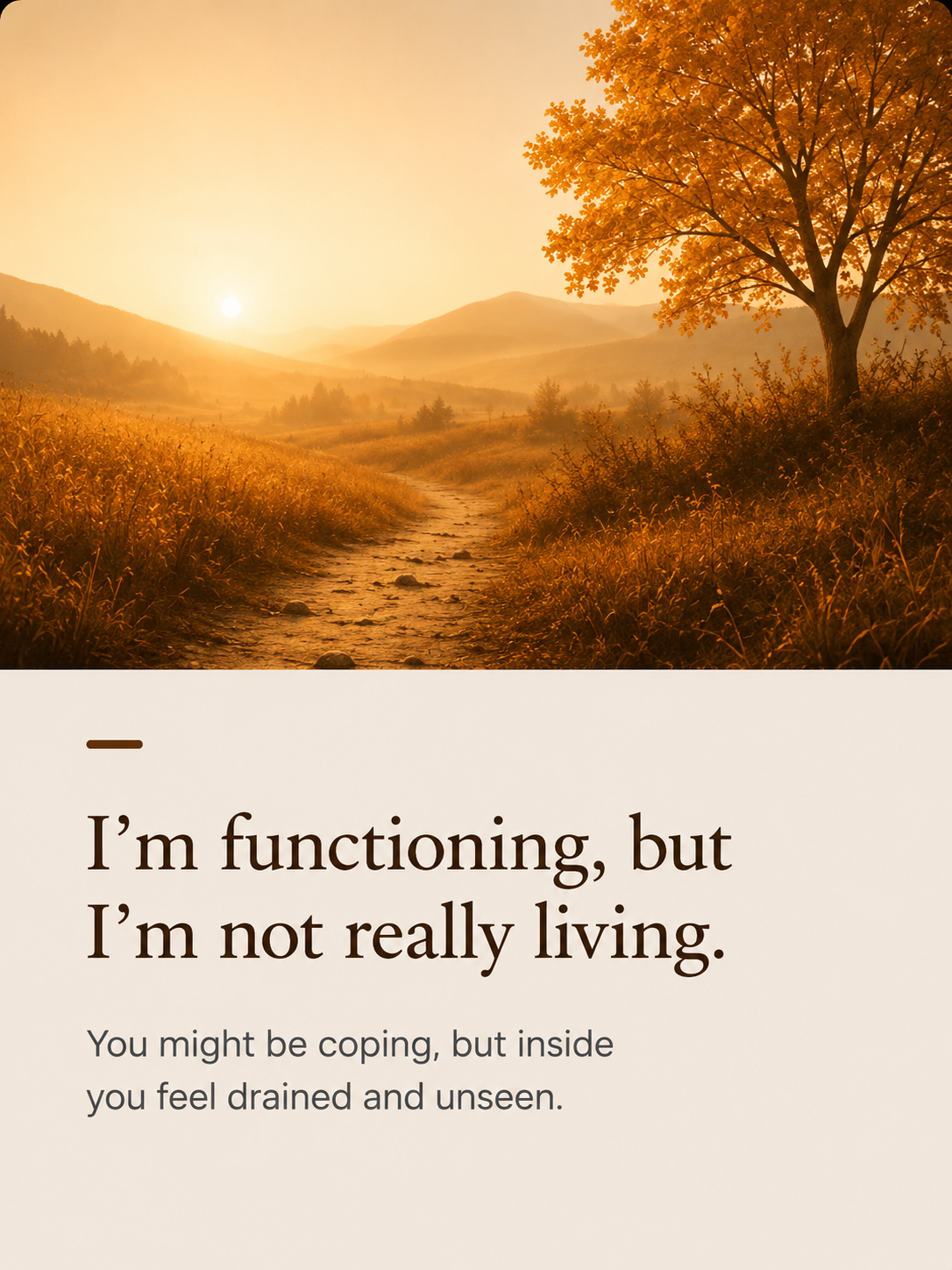
SOMETIMES DEPRESSION LOOKS LIKE …
Depression does not look the same for everyone.
You may relate to some of these experiences, or none at all.
All of them are valid. All of them deserve care.



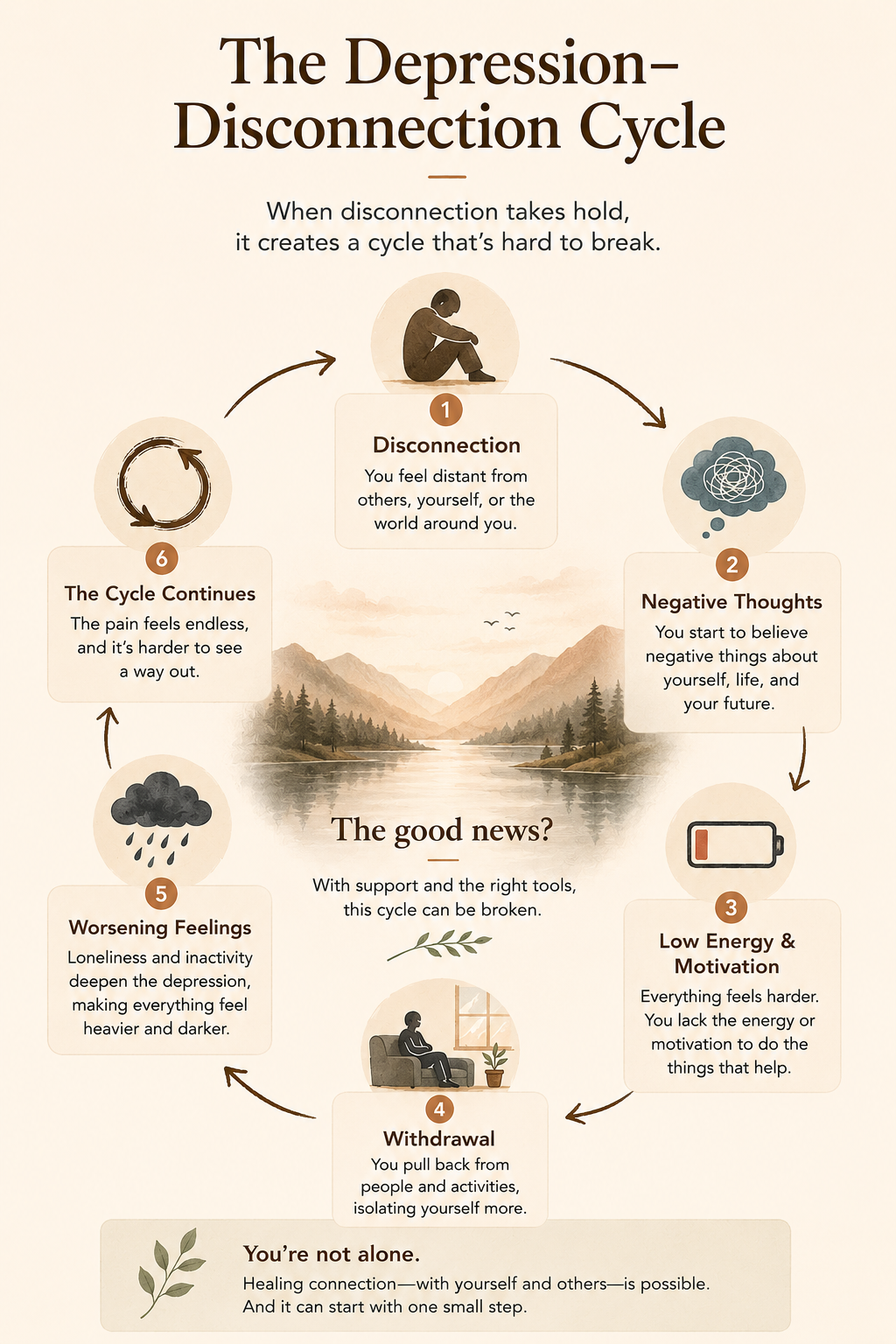
Depression rarely begins all at once. For many people, it develops gradually. You may start feeling emotionally distant from yourself or others, and everyday tasks begin to require much more effort than they used to. As energy decreases, it's natural to withdraw from social activities, hobbies, or responsibilities that once brought comfort or meaning. Unfortunately, this withdrawal can reinforce feelings of loneliness, hopelessness, and self-doubt, making depression feel even heavier over time.
The encouraging news is that this cycle can be interrupted. Therapy is not about simply "thinking more positively" or forcing yourself to be motivated. Instead, it focuses on helping you reconnect—with yourself, the people who matter to you, and the parts of life that have gradually become distant. By understanding the patterns that keep depression going and taking small, manageable steps forward, many people find that hope, energy, and a sense of purpose slowly begin to return.
Depression in Canada (2026)
Although Canada does not yet have official 2026 national prevalence statistics specifically for depression, the most recent Canadian data continue to show that depression is one of the country's most common mental health conditions.
About 1 in 20 Canadians (approximately 5%) aged 15 and older experience a major depressive episode in any given year.
Approximately 11% of Canadian adults will experience Major Depressive Disorder at some point in their lifetime.
One in five Canadians experiences a mental illness in any given year, with mood disorders such as depression being among the most common.
Depression is most common among working-age adults (15–64 years) and remains one of the leading contributors to disability, reduced quality of life, and lost productivity in Canada.
References:
Centre for Addiction and Mental Health (2026). Depression.
Centre for Addiction and Mental Health (2026). Mental Illness and Addiction: Facts and Statistics.

MAKE THE DAY MORE POSSIBLE
When depression is heavy, everyday tasks can feel much larger than they appear.
We may begin by creating enough structure to make eating, sleeping, moving, working, or caring for yourself feel more manageable. The steps need to be realistic for the energy you have, not another list of expectations you are failing to meet.

RECONNECT BEFORE WAITING FOR MOTIVATION
Depression may tell you to wait until you feel better before doing anything.
Instead, we gradually look for manageable ways to reconnect with people, activities, routines, and values. Motivation does not always arrive first. Sometimes it begins to return after you have experienced small moments of movement, connection, or meaning.
CBT, ACT, DBT, behavioural activation, and practical strategies may become useful here. EFT can all play a role, helping you not only take meaningful steps forward, but also understand and process the emotions that may be keeping you feeling stuck.

UNDERSTAND WHAT HAS BECOME SO HEAVY
Sometimes depression is connected to grief, loneliness, shame, burnout, attachment injuries, rejection, trauma, cultural pressure, or years of placing your own needs last.
This is where our work may become more emotion-focused and attachment-informed.
The goal is not only to help you function again. It is also to understand what you have been carrying and what may need care, expression, boundaries, grieving, or change.

What Our Sessions Look Like
At our clinic, depression therapy is not about sitting quietly while you try to force yourself to think positively.
You will have space to talk through what has been happening, even when you are not sure how to explain it. We may ask specific questions, help organize what feels foggy, point out patterns, and gently bring attention to the ways depression has been pulling you away from your life.
Some sessions may focus on daily structure, coping, and small actions. Others may explore grief, relationships, shame, identity, attachment, or experiences that have gradually worn you down.
You do not need to arrive motivated or know exactly what you want from therapy.
Sometimes, “I do not feel like myself anymore” is enough of a place to start.
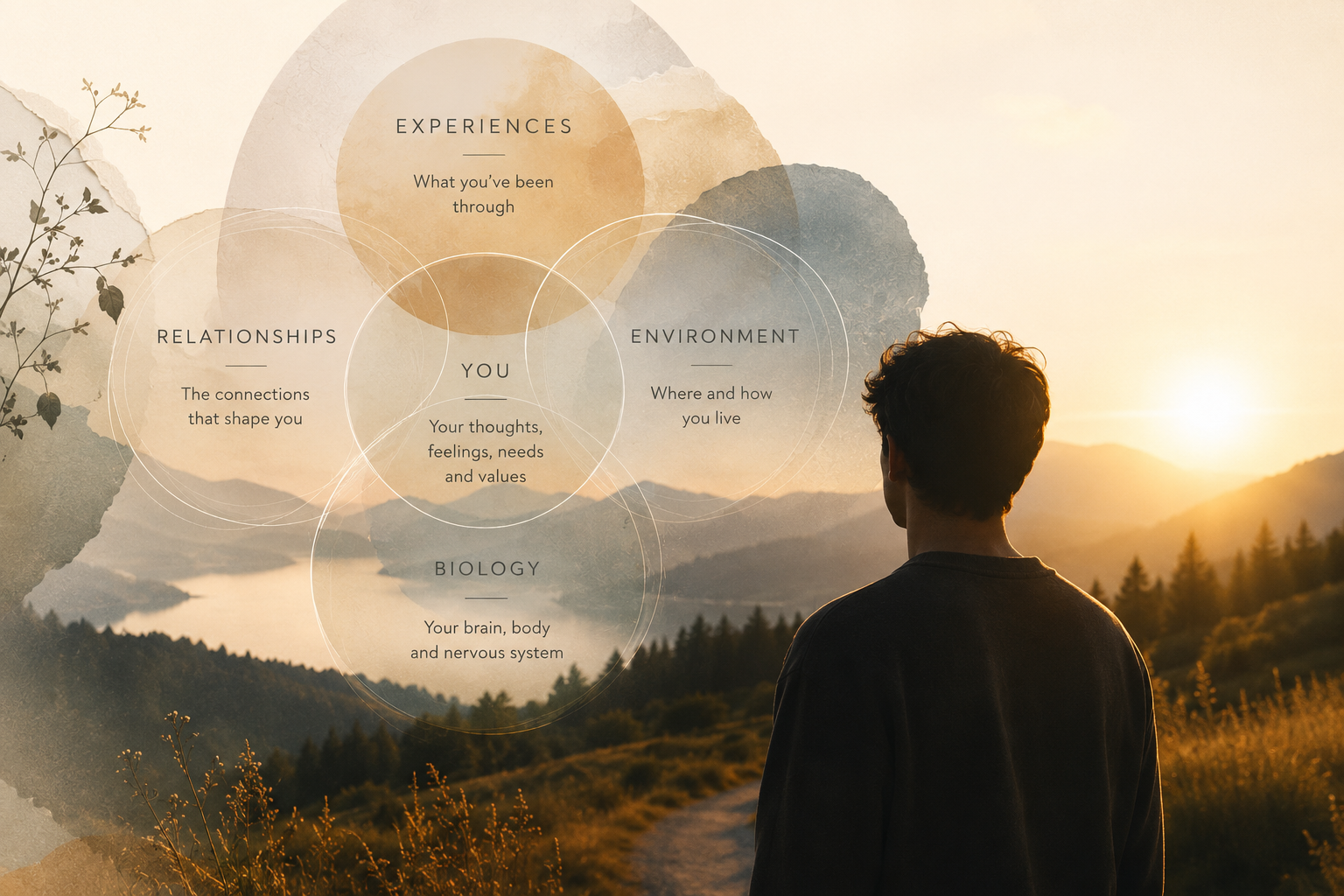
Understanding Your Depression in Context
Not every reason for feeling low is located inside you.
Your culture, identity, relationships, family expectations, financial pressure, working conditions, health, and experiences of rejection or disconnection can all affect how much you have been carrying.
At our clinic, we are careful not to treat every painful thought as a distorted belief that simply needs to be corrected.
For immigrant, BIPOC, and LGBTQ+ clients, depression may also be influenced by minority stress, discrimination, cultural isolation, family pressure, identity concealment, or an ongoing feeling that there is nowhere you can fully rest and be yourself.
For neurodivergent clients, depression may develop alongside masking, repeated criticism, executive functioning difficulties, social exhaustion, sensory overload, and burnout.
Therapy can acknowledge these realities while also helping you notice where depression has begun to take more of your life than you want it to.

Maybe nothing looks obviously wrong from the outside.
You are still working, replying to people, taking care of responsibilities, and getting through the day.
But you feel increasingly absent from your own life.
If you are tired of carrying the numbness, exhaustion, loneliness, or self-criticism alone, you are welcome to talk with us.
You do not need to arrive hopeful. You do not need the perfect words.
Just come as you are.
—— HouseYourMind Counselling & Psychology
This clinic does not provide emergency or crisis services. If you are having thoughts of suicide or are worried that you may not be able to keep yourself safe, call or text 9-8-8 for immediate support, available 24/7 across Canada. If you are in immediate danger, call 9-1-1 or go to your nearest emergency department. You don’t have to face this moment alone.