
Attachment Therapy
DOWNTOWN EDMONTON | VIRTUAL THERAPY ACROSS CANADA
ATTACHMENT THERAPY & RELATIONSHIP PATTERNS
You can want closeness and still feel afraid of what it might cost.
Attachment patterns can shape how you trust, ask for reassurance, handle distance, protect yourself, and respond when a relationship feels uncertain. Therapy can help you understand the pattern without reducing you to a label.

Sometimes, the relationship is not the only thing hurting. The pattern around it is.
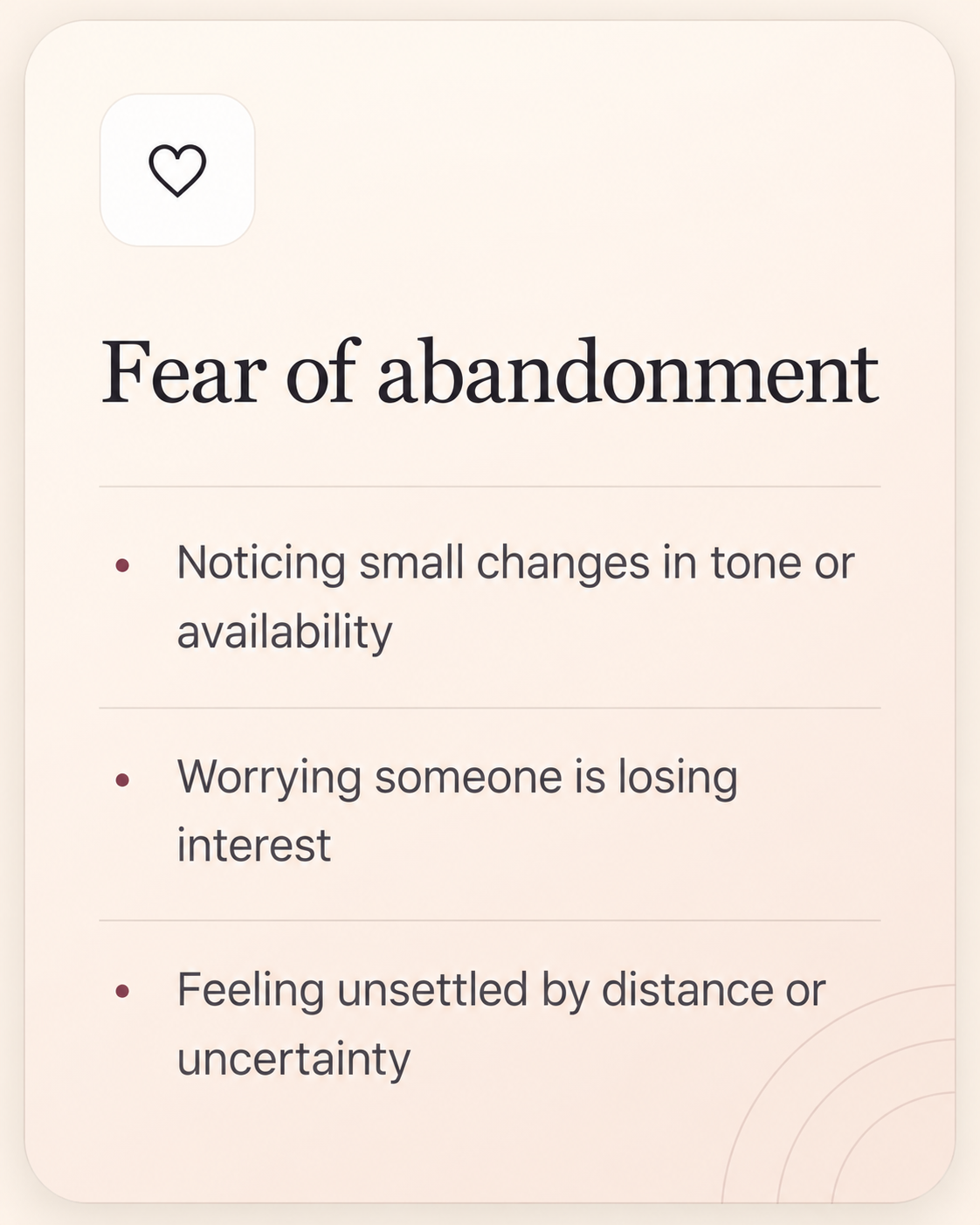
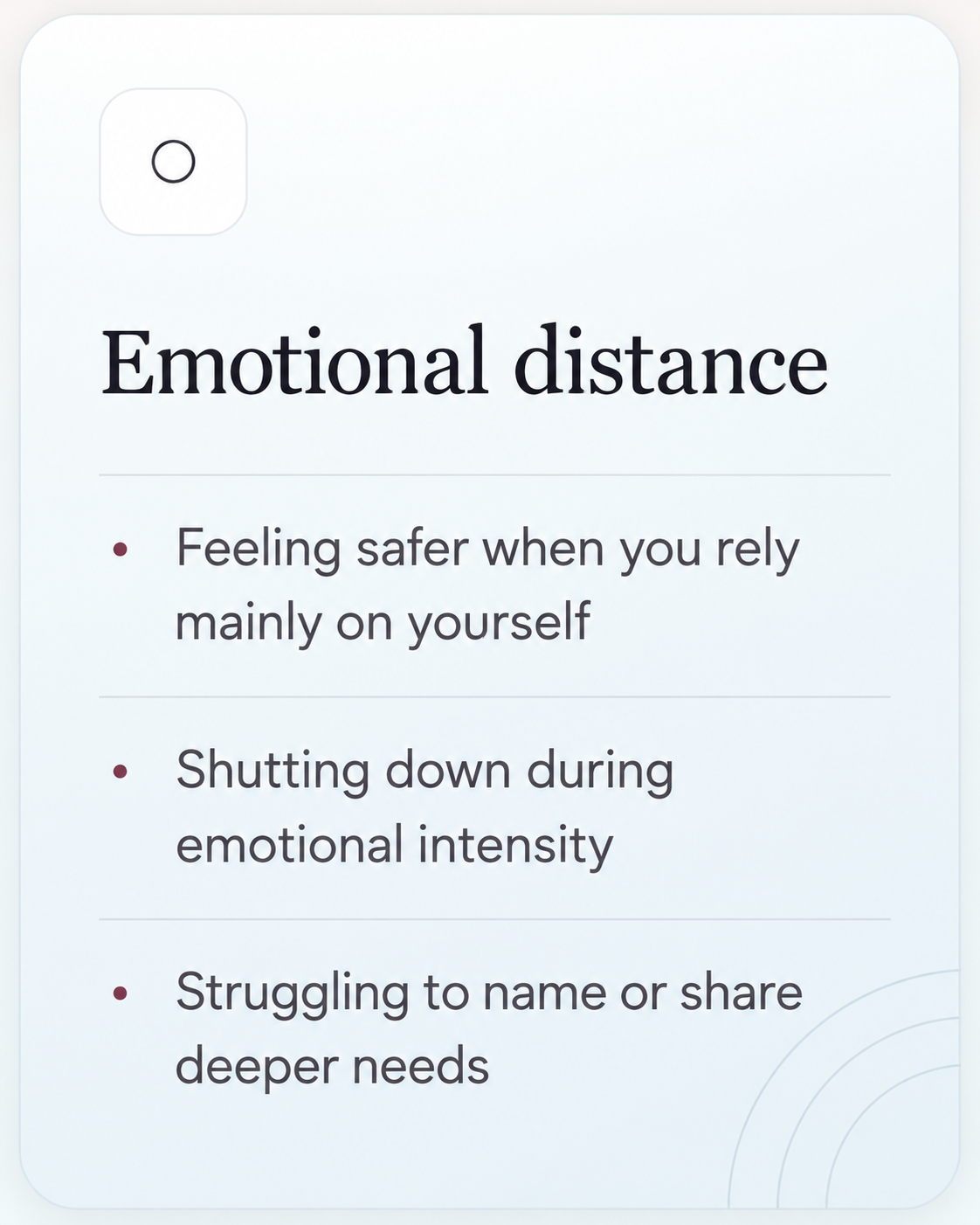
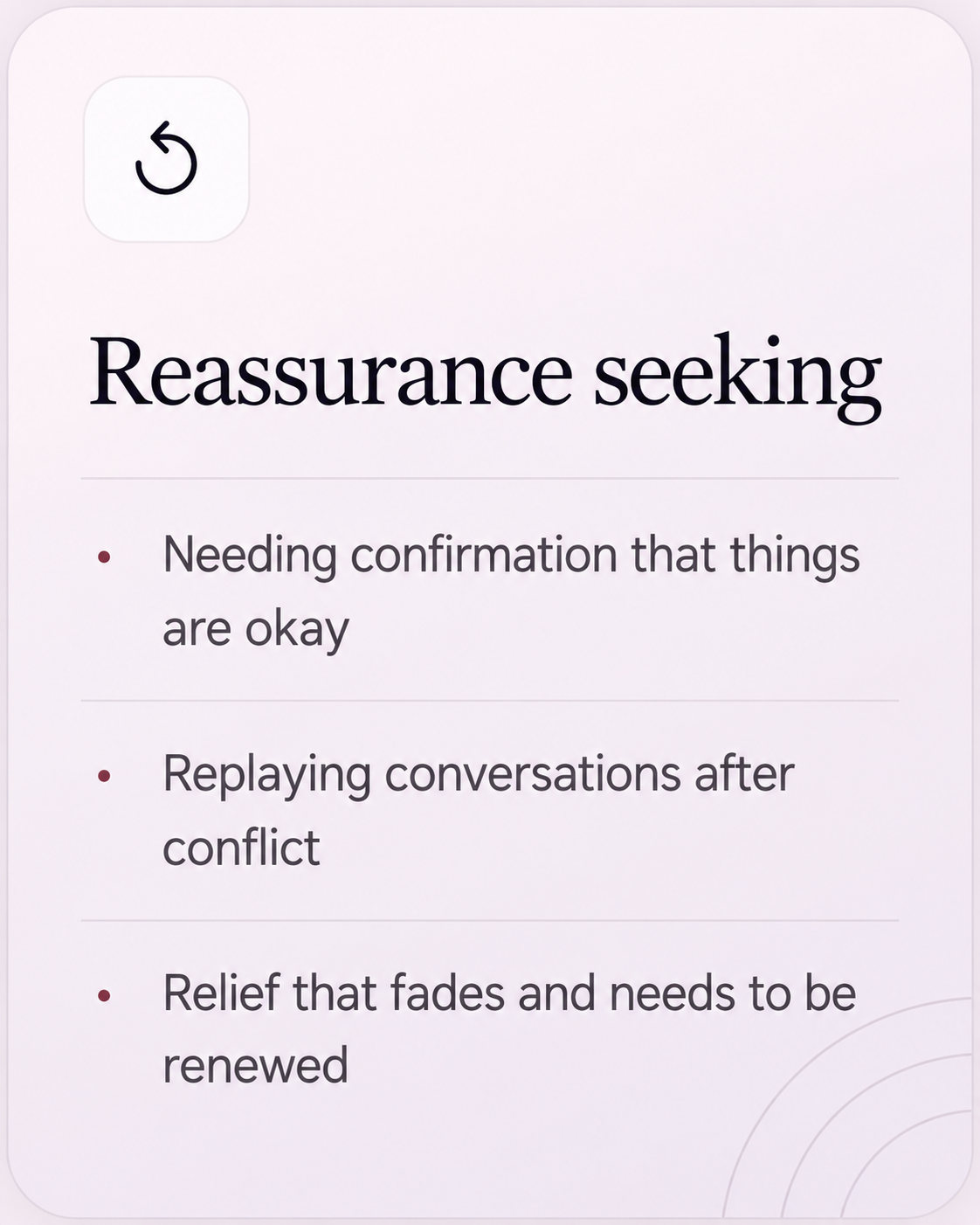
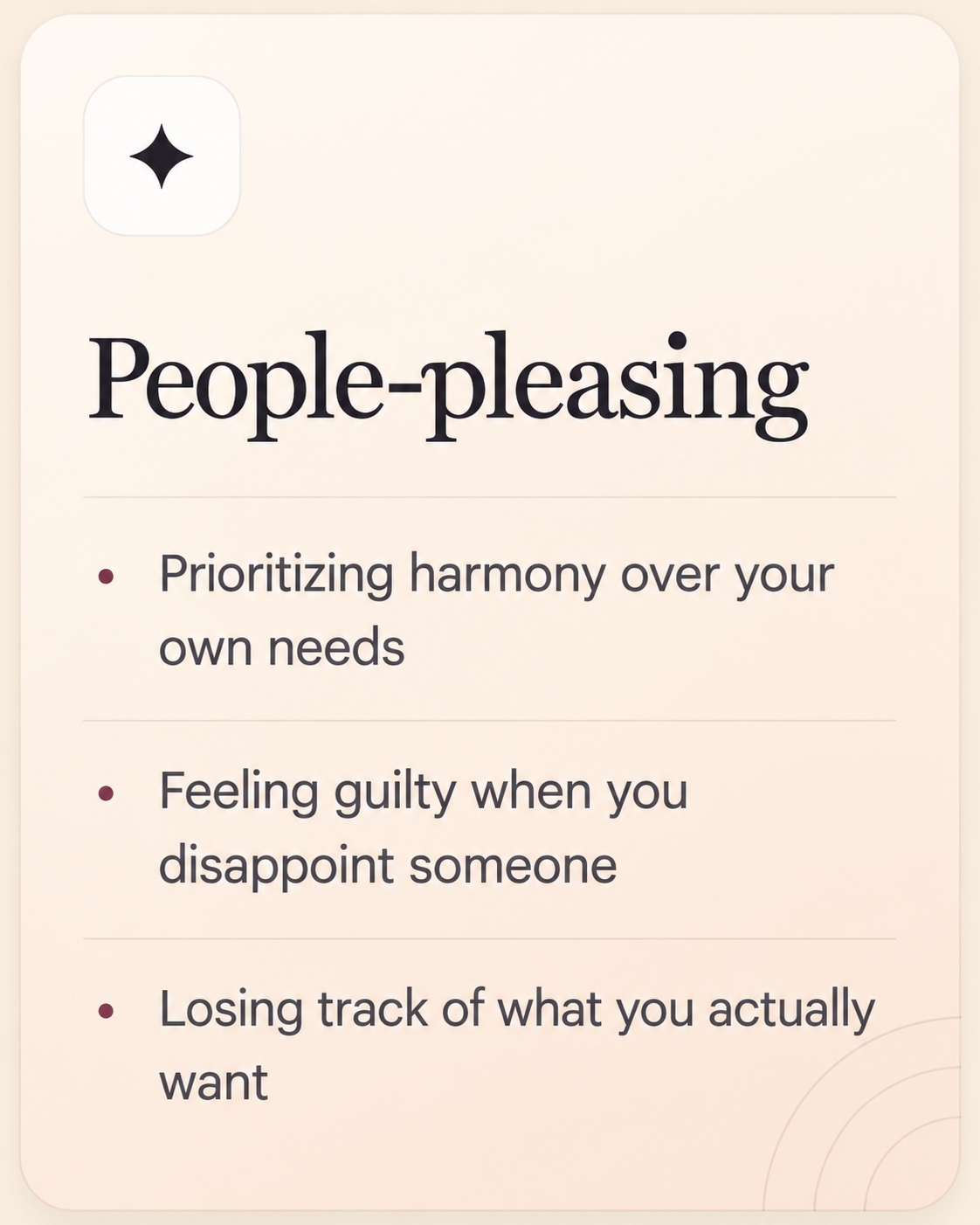
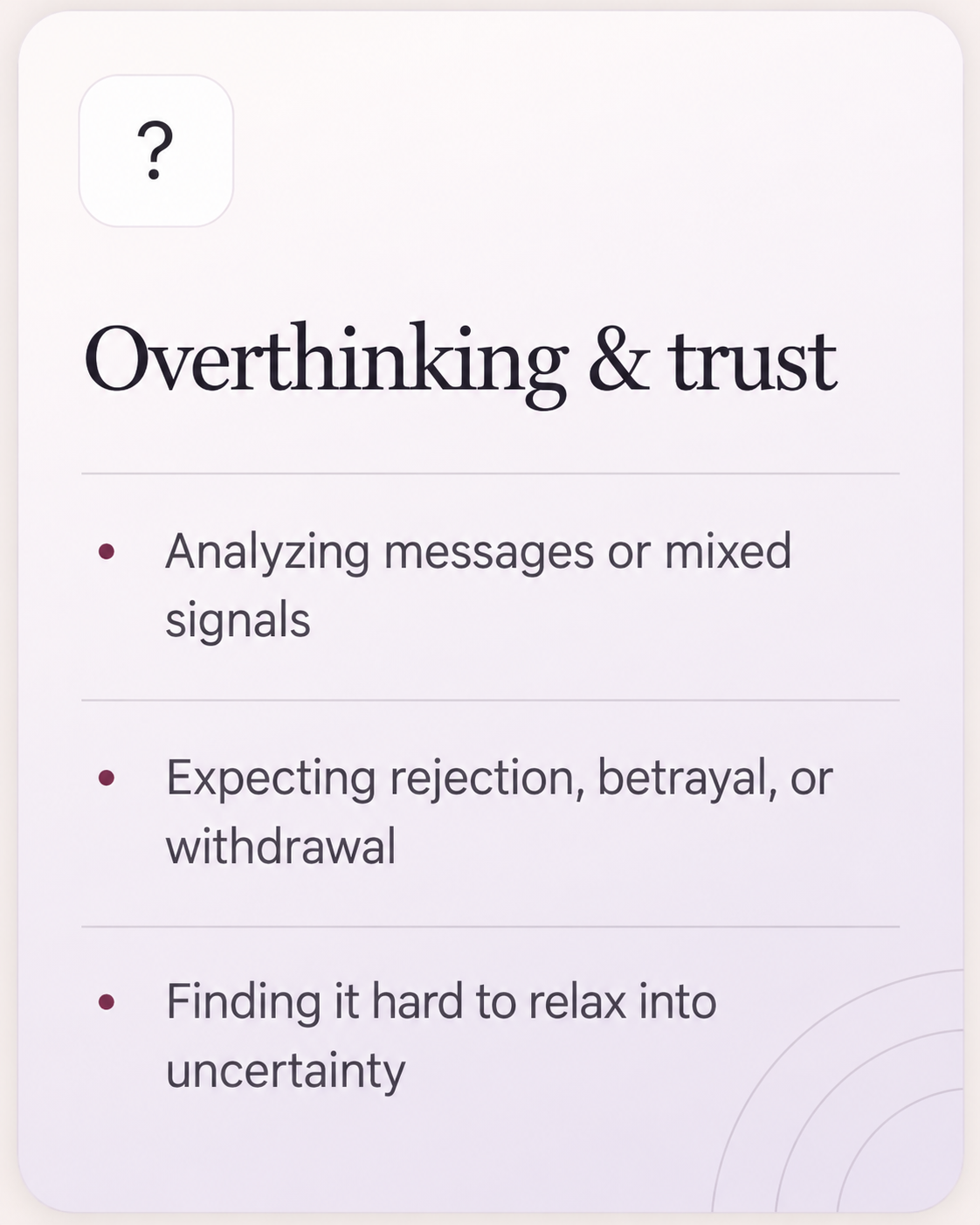
You may notice yourself reading into a change in tone, needing reassurance that everything is okay, shutting down when someone wants more closeness, or feeling caught between wanting connection and wanting distance.
These responses often make more sense when we look at what your mind and nervous system have learned about safety, dependence, rejection, conflict, and vulnerability.
Attachment patterns do not always look the way people expect.
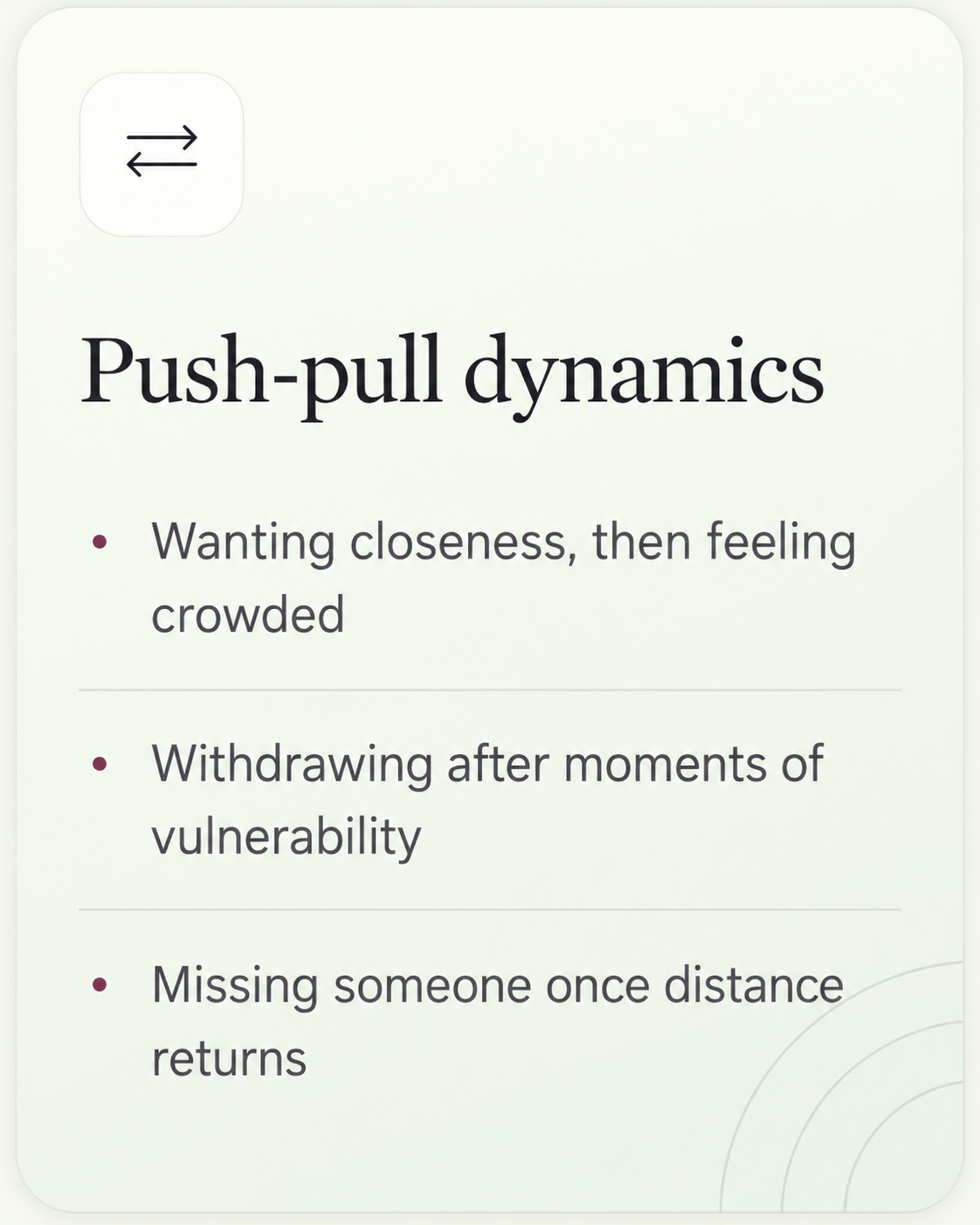
Some people move toward others when they feel threatened. Others create distance. Many people do both, depending on the relationship and the moment.
UNDERSTANDING ATTACHMENT LANGUAGE

Useful as a map, not a box.
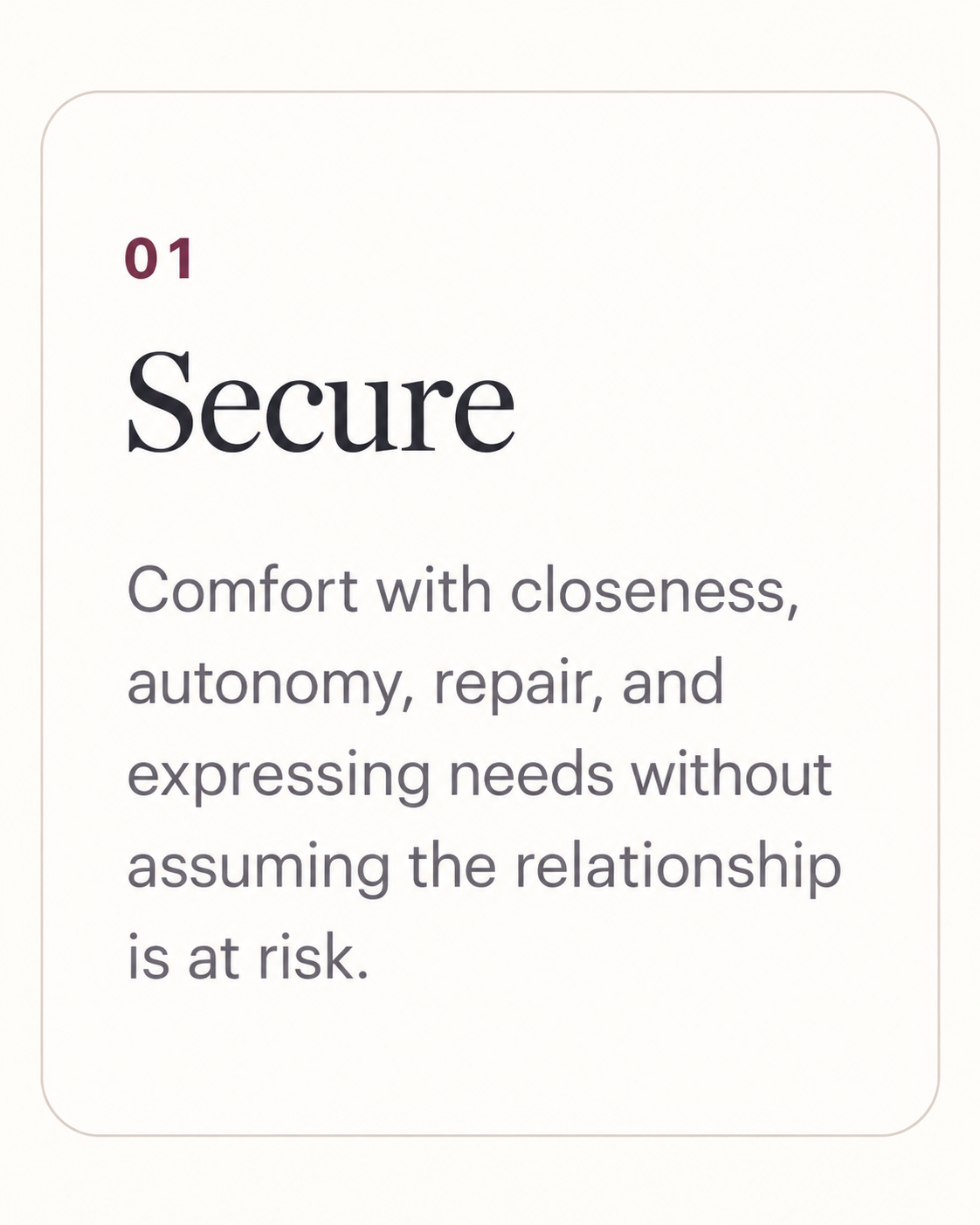
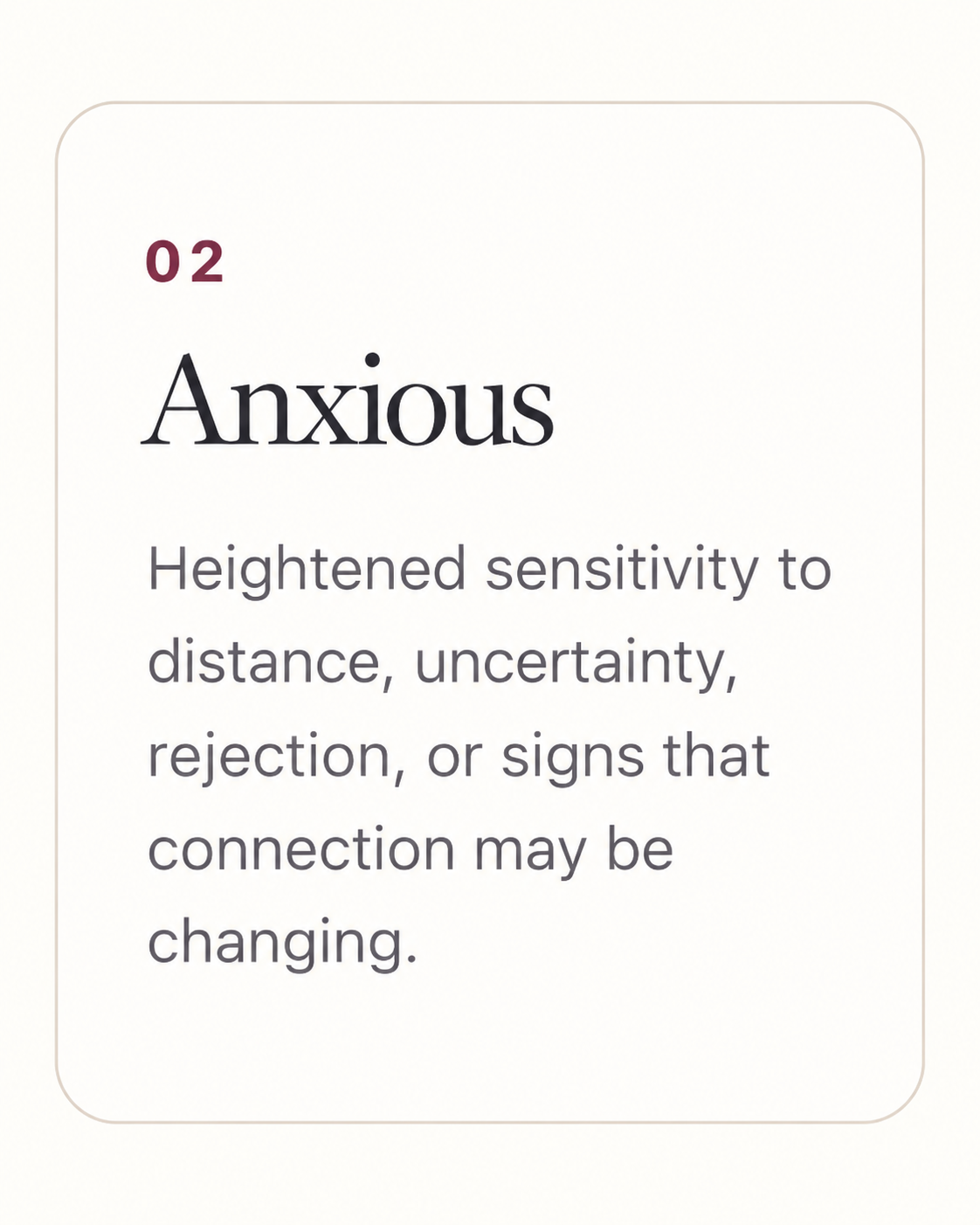
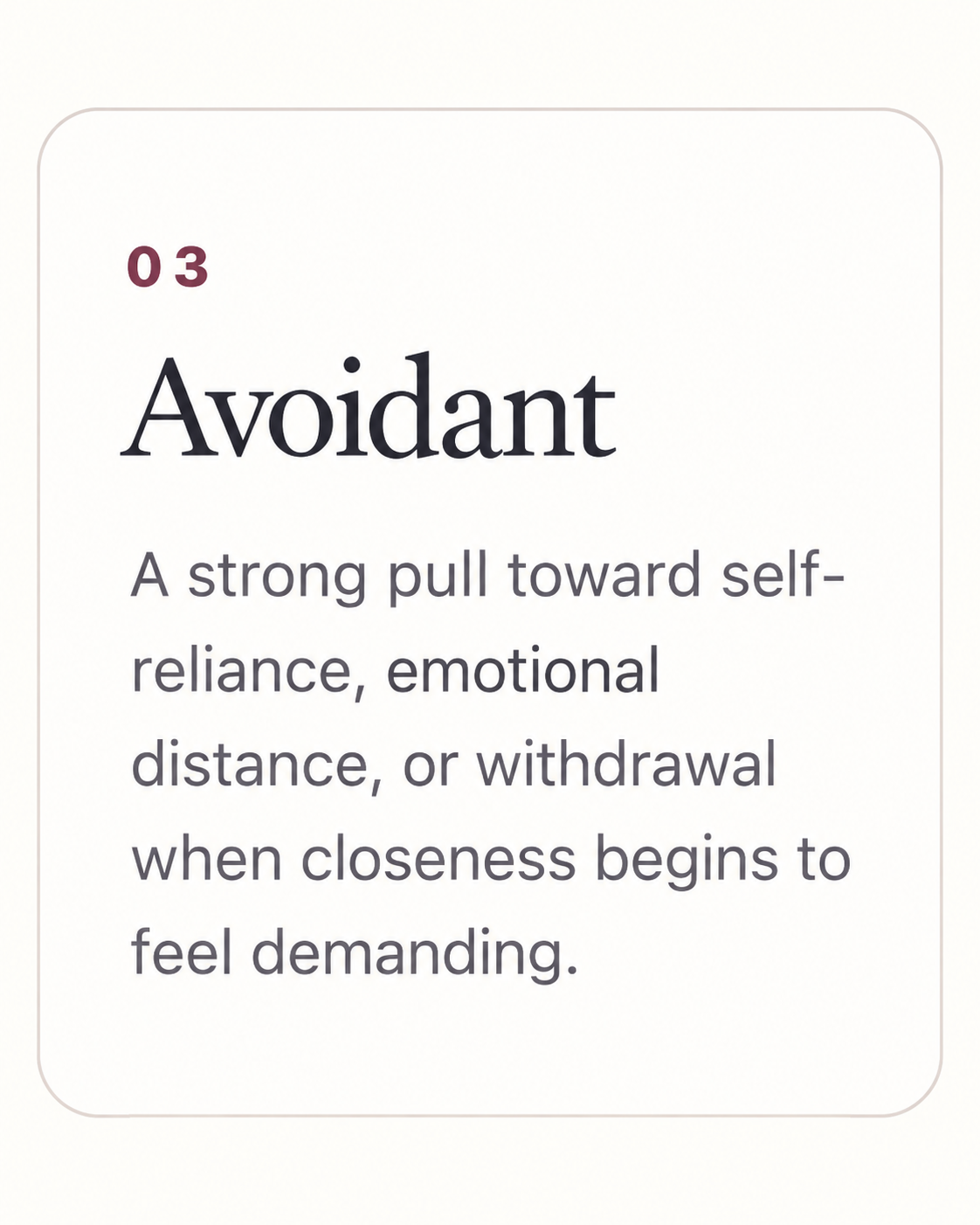
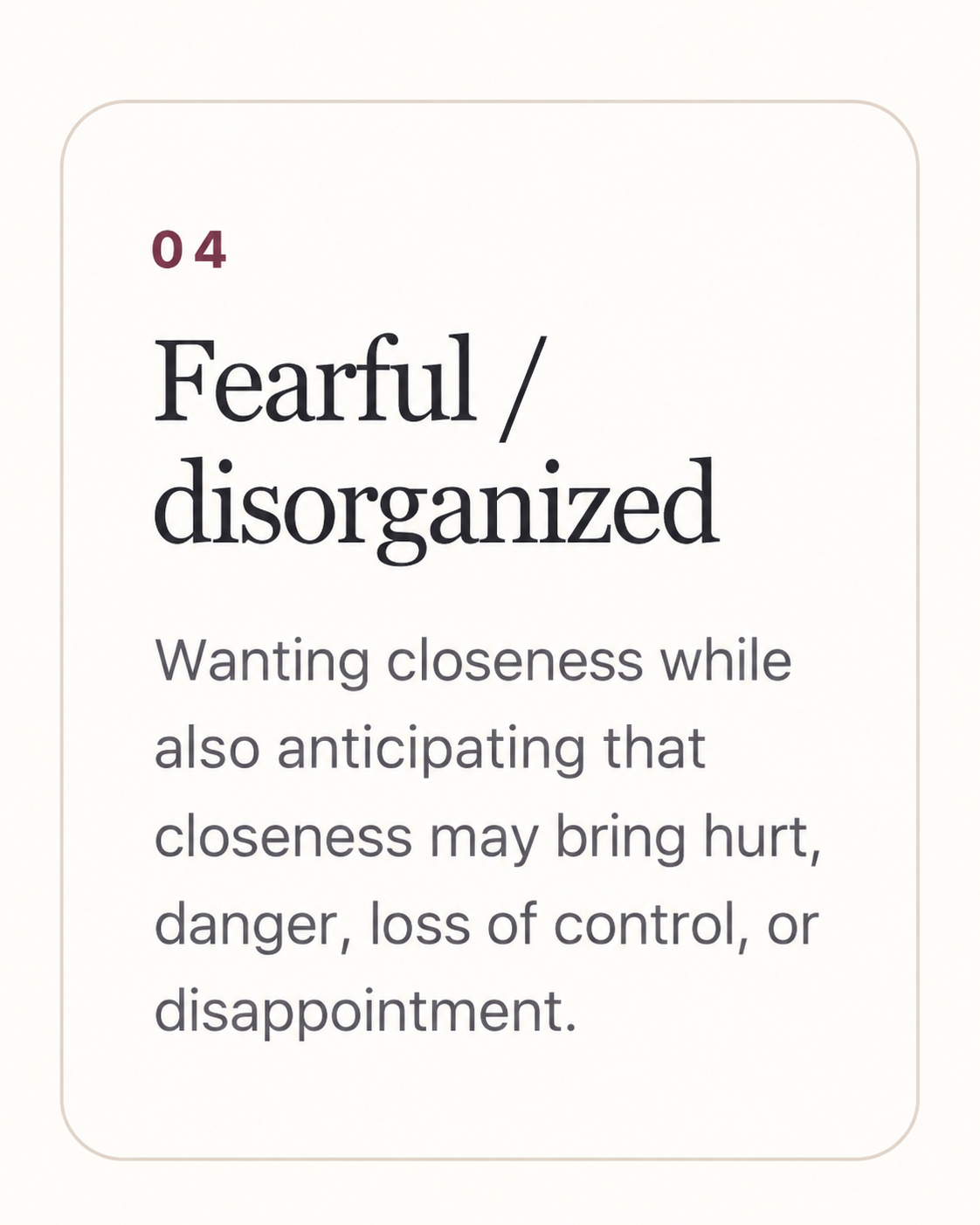
Terms such as anxious, avoidance, fearful, and secure can help describe recurring ways of relating. They are not diagnoses, fixed identities, or a complete explanation of who you are.
Your relationship patterns did not develop in a vacuum.
How you learned to connect with others may have been shaped by many experiences, not one simple cause.

Consistency matters.
Predictable care, emotional availability, conflict, loss, separation, or inconsistency can all influence what closenees comes to mean.
Culture shapes connection.
Family roles, collectivistic values, expectations around independence, gender, sexuality, emotional expression, and filial responsibility can shape how needs are expressed or hidden.
Later relationships matter too.
Betrayal, rejection, emotionally unavailable partners, supportive partners, and experiences of repair can reinforce old expectations or help create new ones.
Patterns can change.
Attachment is not destiny. New experiences, insight, boundaries, communication, and emotionally safer relationships can gradually reshape how connection feels.
Sometimes the hardest part is what happens after the trigger.
ATTACHMENT IN EVERYDAY LIFE
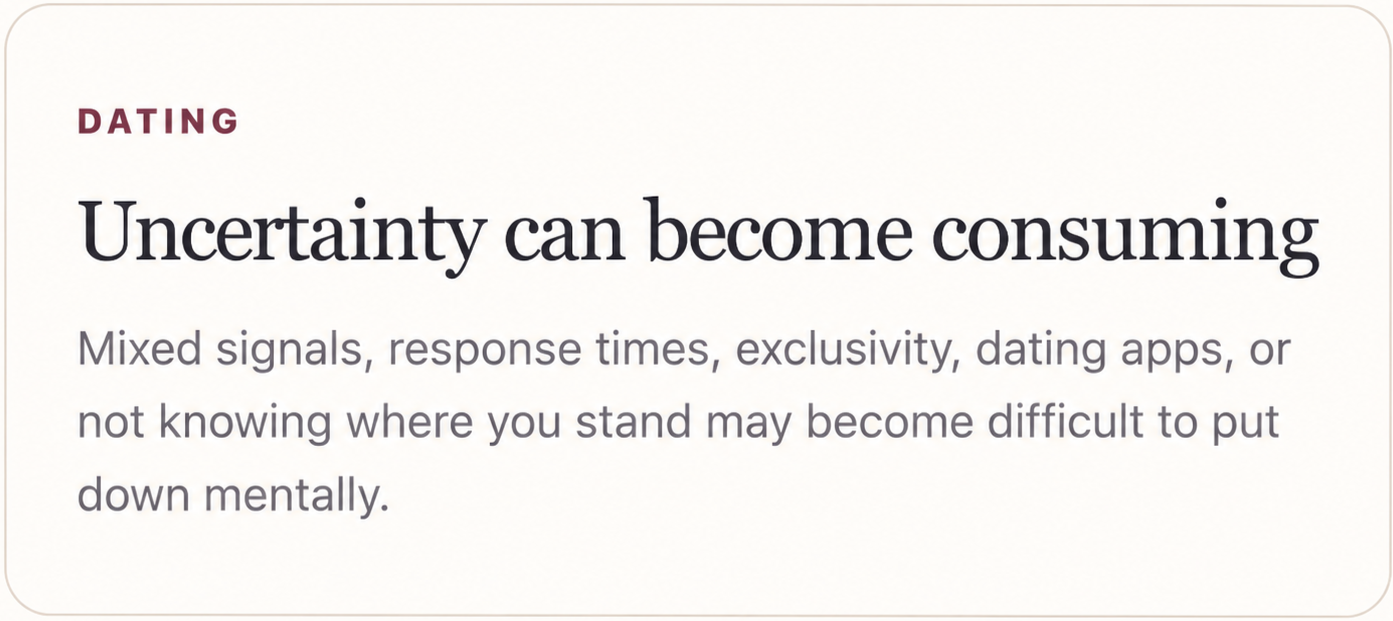
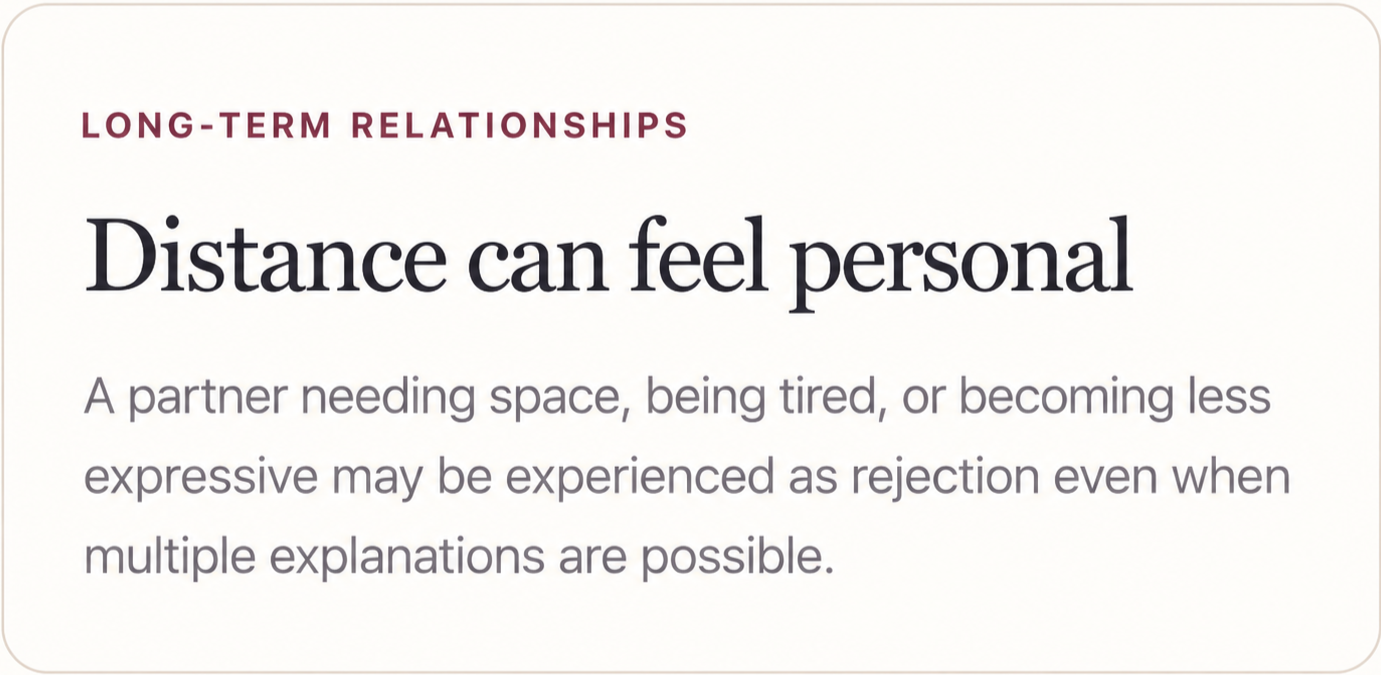
A delayed reply, a disagreement, a request for space, or an intimate conversation can activate a much larger emotional sequence.
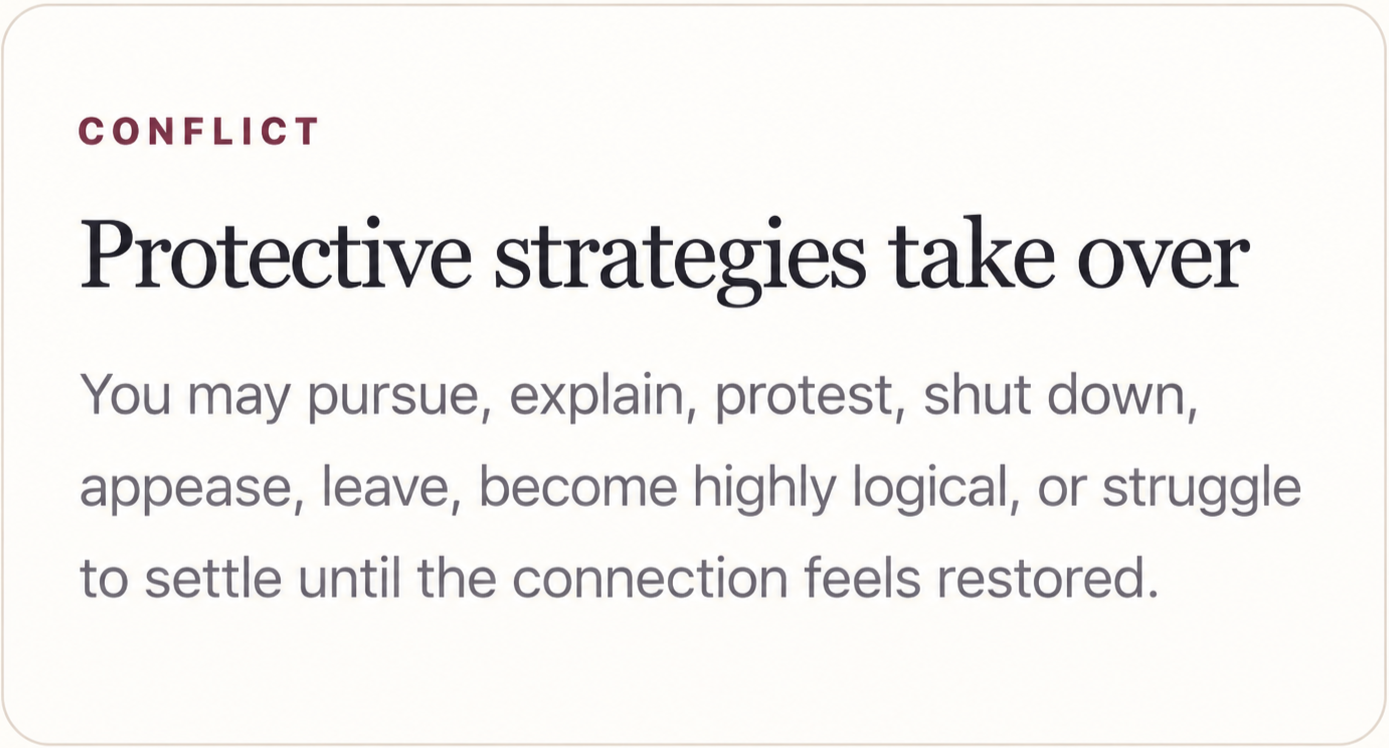
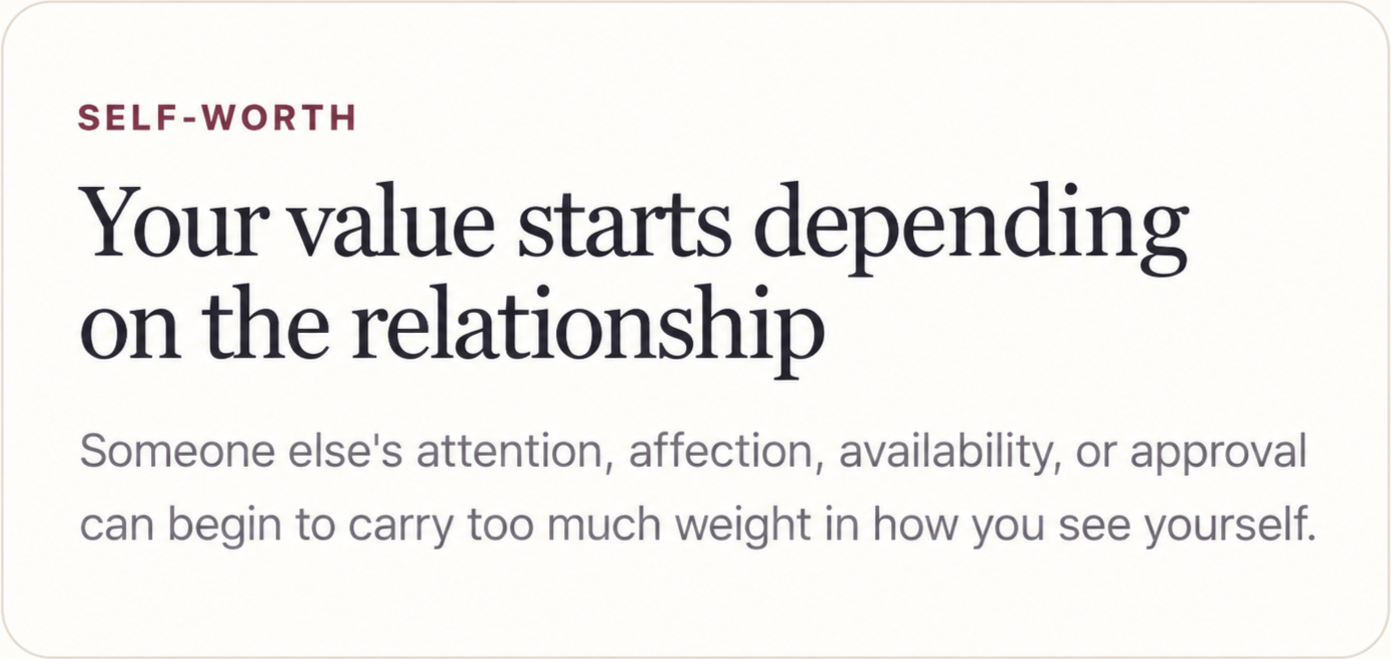
Therapy is NOT about teaching you to stop needing people.
The goal is greater security and flexibility: being able to connect, communicate, tolerate, uncertainty, protect your boundaries, and stay connected to yourself at the same time.
WHAT OUR SESSIONS MAY LOOK LIKE…
Collaborative, curious, and focused on what actually happens between people.
You do not have to arrive knowing your attachment style. We can begin with a recent conversation, a dating situation, a conflict, or a pattern you keep noticing.

Start with the pressure point.
We begin with the relationship moment that is taking up the most space right now.
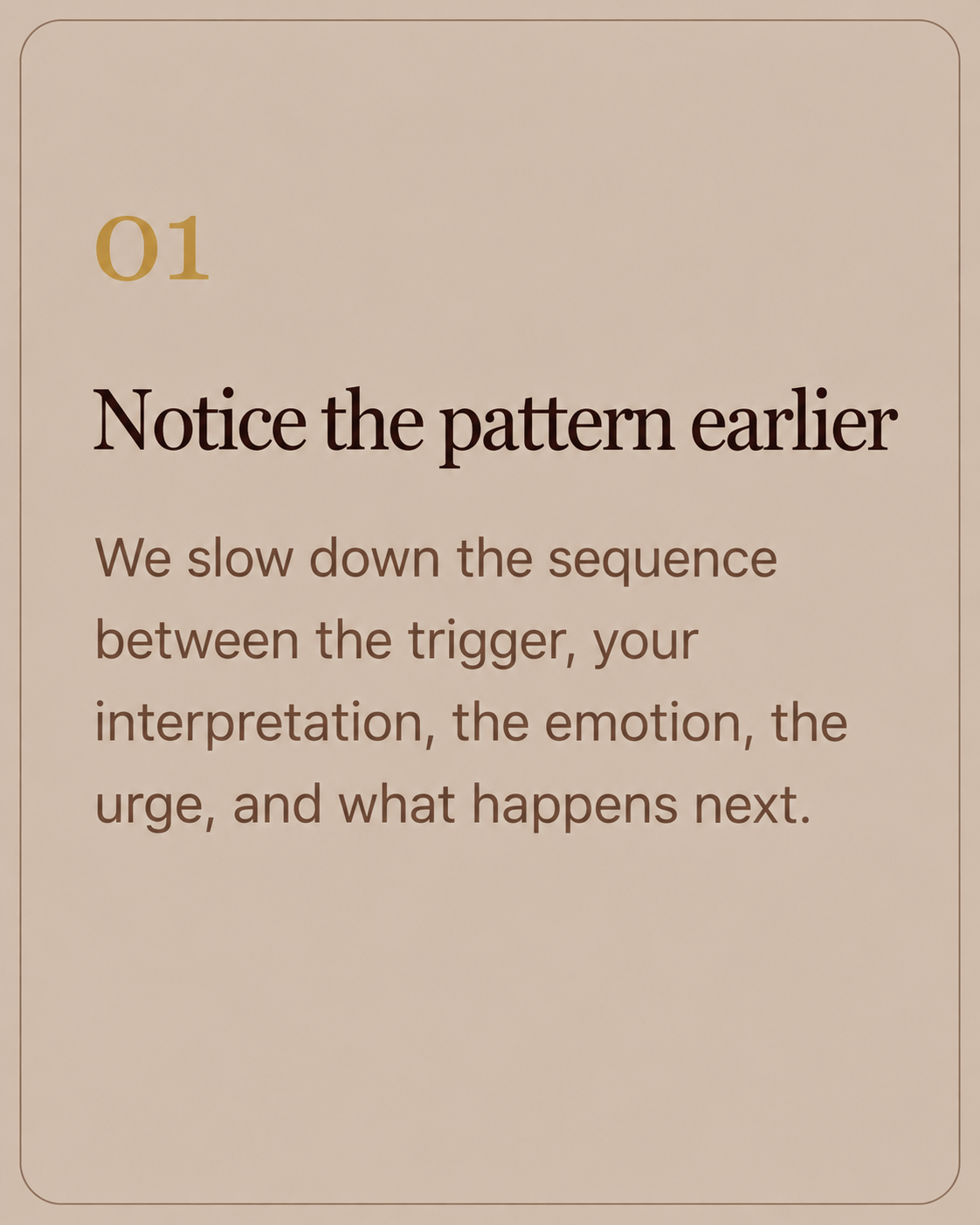
Slow down what happened.
We explore what you noticed, assumed, felt, needed, feared, and did before the interaction accelerated or shut down.
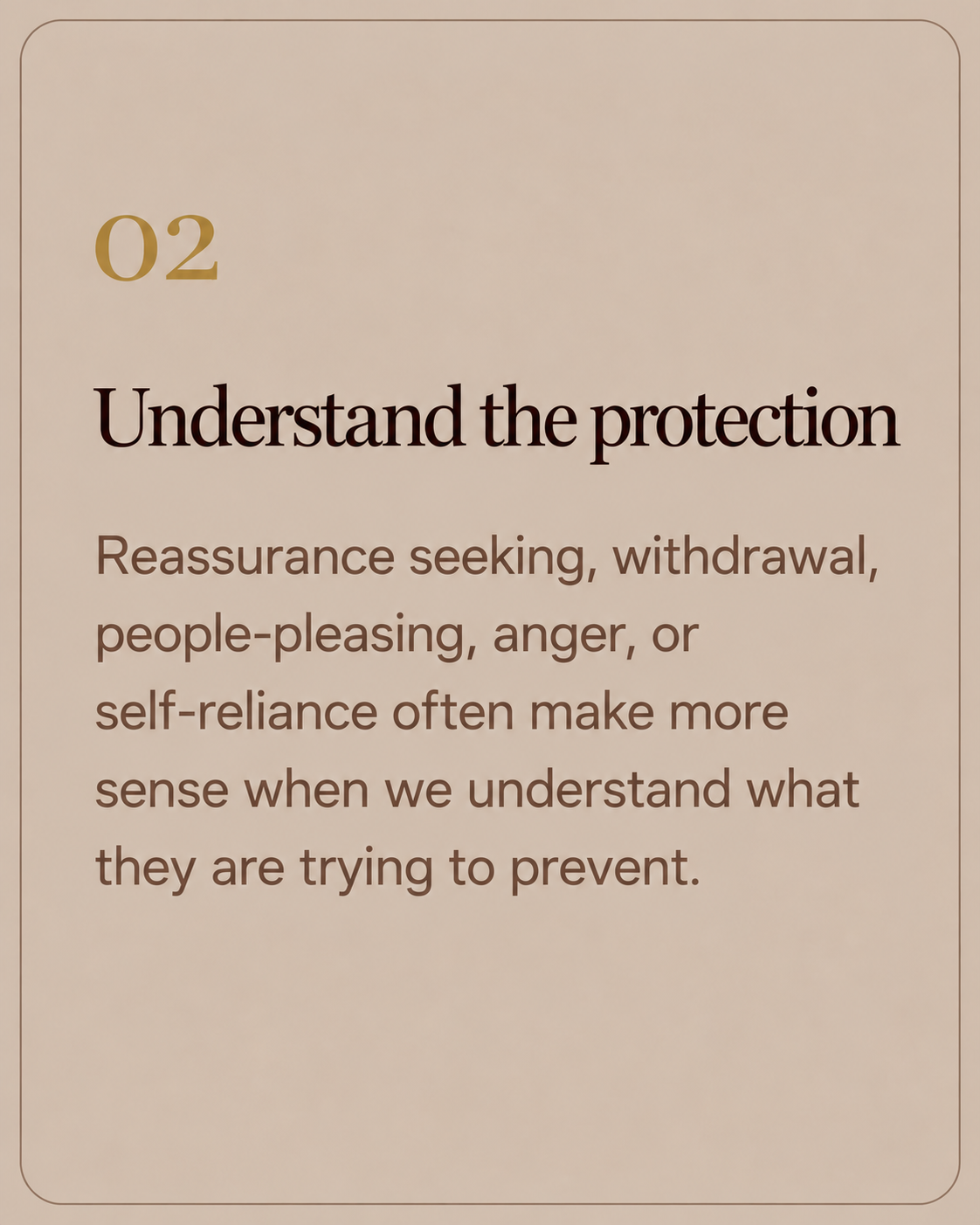
Connect it to the broader pattern.
We stay curious about whether the same emotional sequence has appeared with partners, family, friends, or in earlier relationships.
Try a different response.
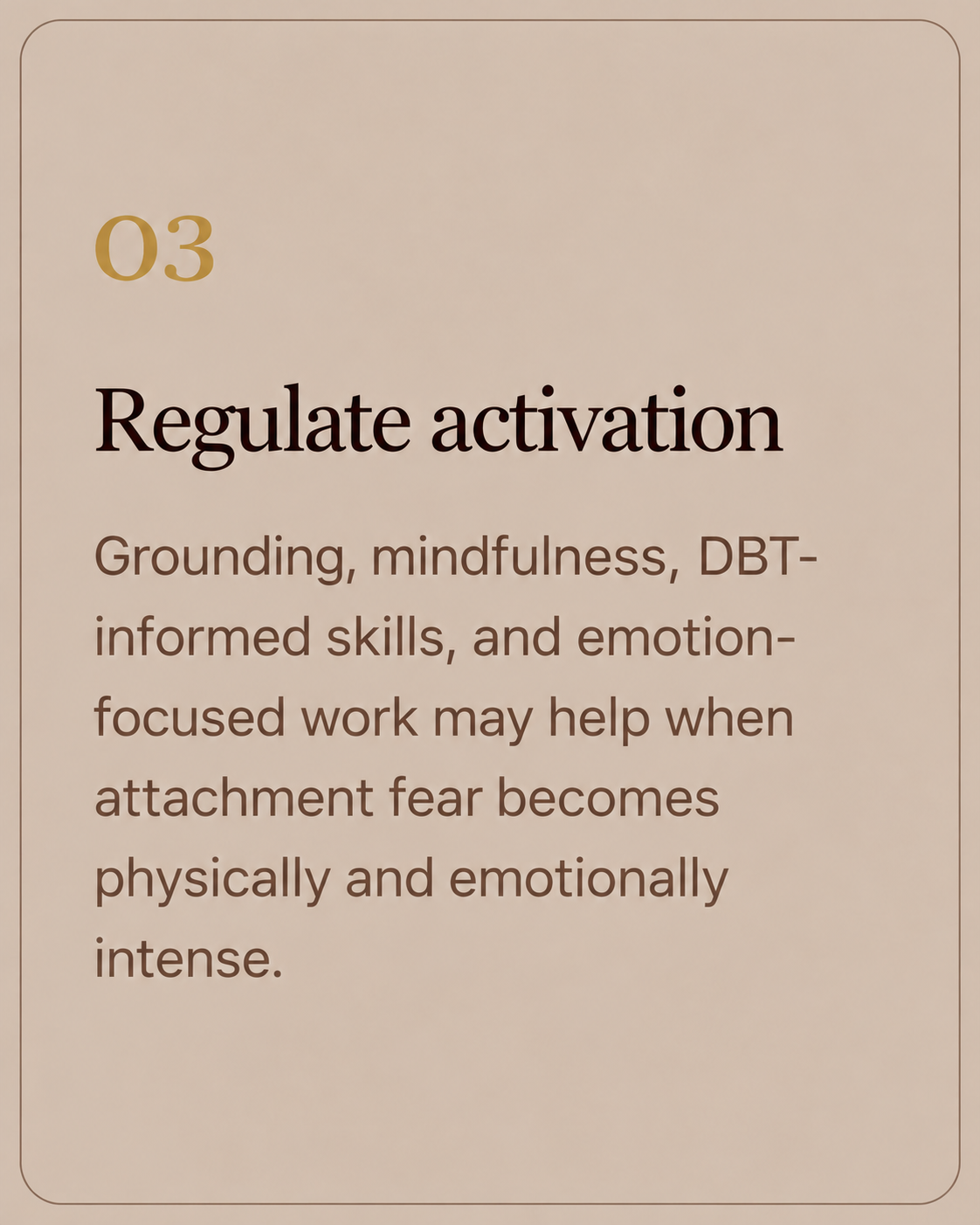
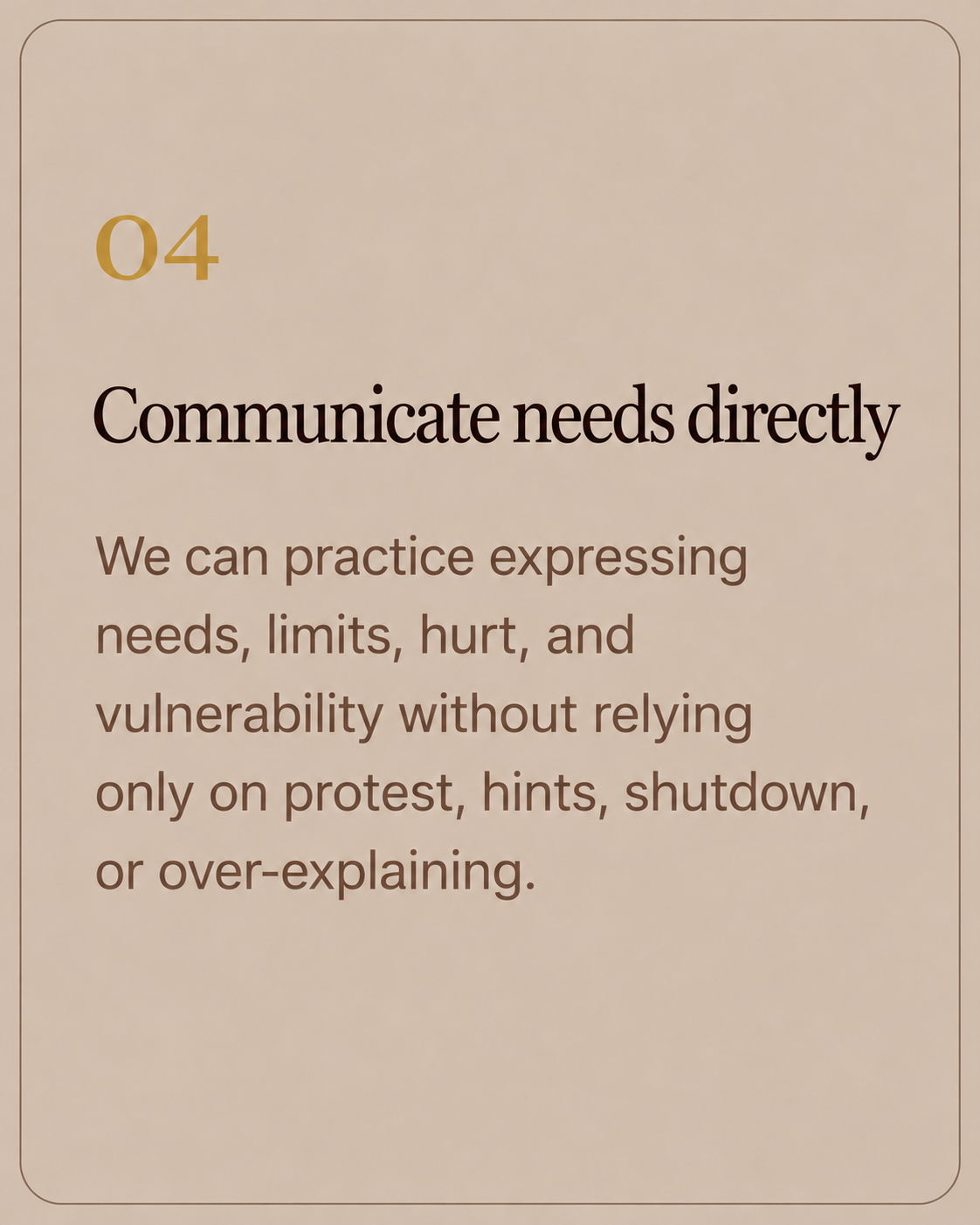
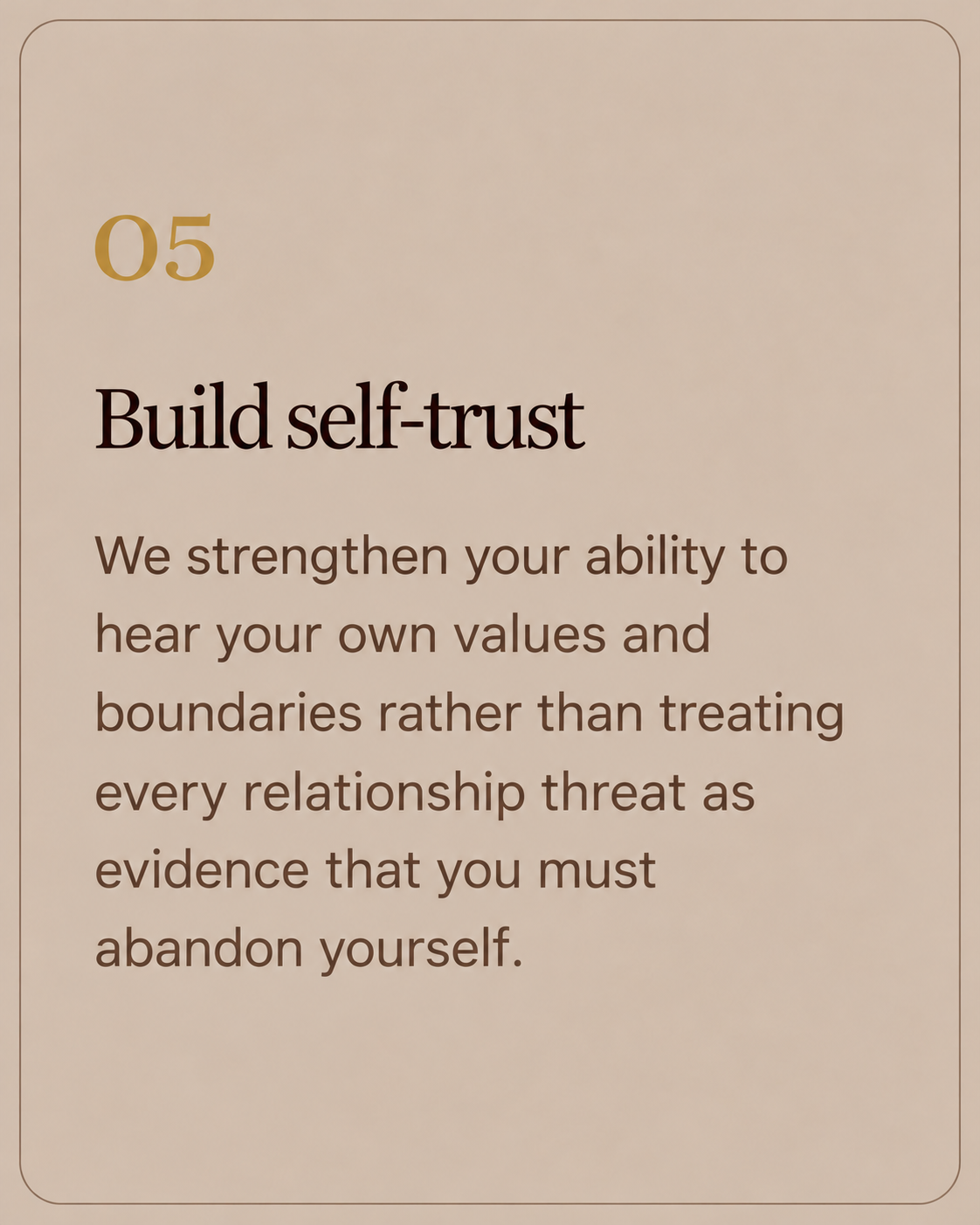
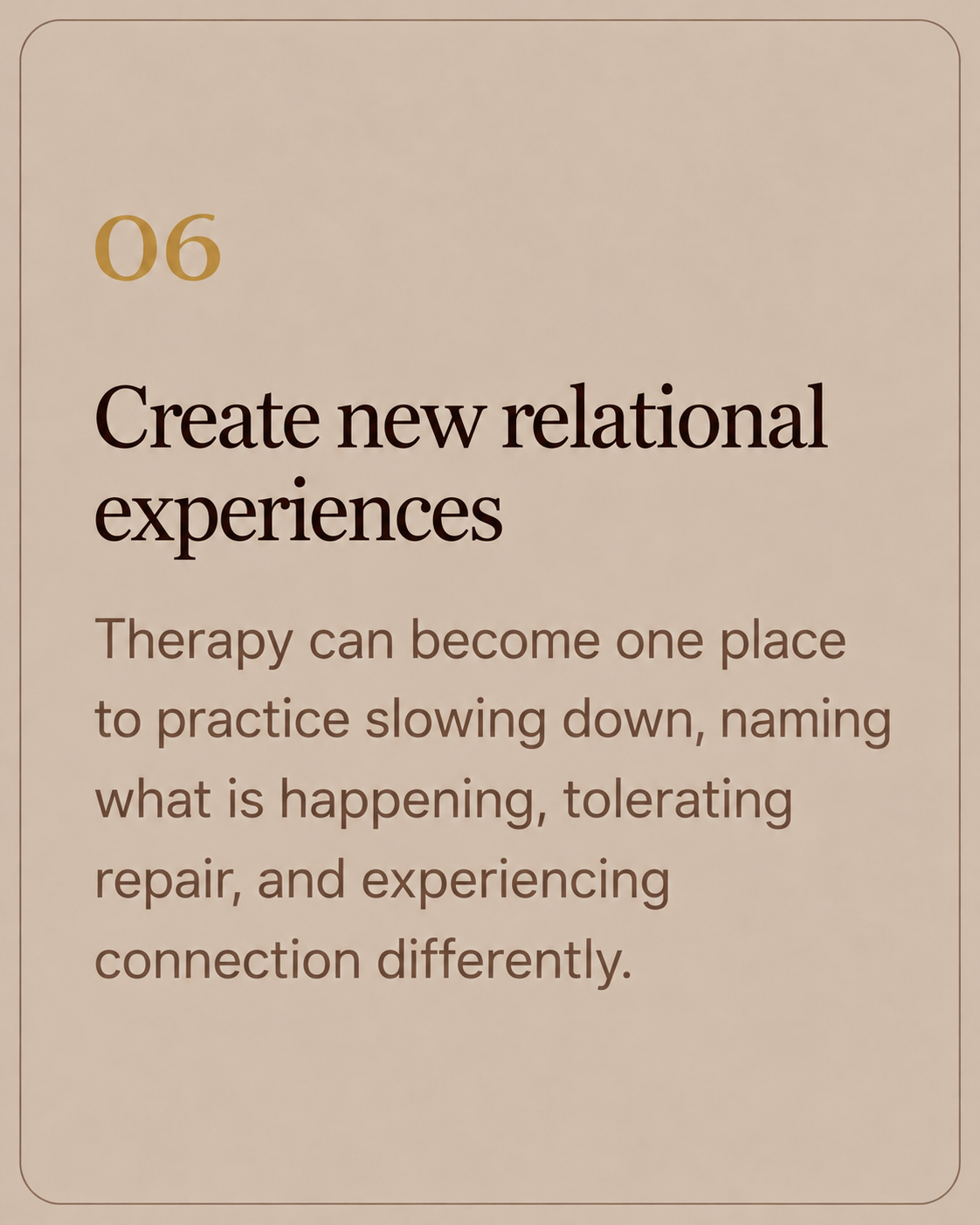
Depending on your needs, we may work with emotion, challenge assumptions, practice a conversation, clarify a boundary, or build tolerance for uncertainty.
Approaches may integrate attachment-based therapy, Trauma-informed therapy, EFT/EFiT, CBT, ACT, DBT-informed skills, mindfulness, motivational interviewing, narrative work, and self-compassion.
A few things you may be wondering.
FREQUENTLY ASKED QUESTIONS
-
No. You can come in with the experiences you are noticing. Attachment language can be useful when it adds clarity, but we do not need to force your experience into a category.
-
No. Attachment styles are conceptual ways of describing patterns around closeness, dependence, vulnerability, and perceived relationship threat. They are not psychiatric diagnoses.
-
Yes. Individual therapy can be useful whether you are dating, partnered, single, recovering from a breakup, or trying to understand patterns from past relationships.
-
No. These patterns often reflect ways of protecting yourself or maintaining connection that developed for understandable reasons. Therapy focuses on increasing choice rather than shaming the strategy.
-
Yes. Patterns can become more flexible through insight, regulation, boundaries, communication, emotionally safer relationships, and repeated experiences of repair.
-
No. Attachment patterns may also show up with family, friends, colleagues, and in how you respond to your own emotions and needs.
Whether You Know the Pattern or Just Know Something Keeps Hurting
You may already recognize your attachment patterns — or you may simply notice that closeness, distance, trust, or vulnerability keeps becoming difficult.
Therapy can offer a safer space to slow things down, understand what is happening underneath, and begin creating new ways of relating that feel more secure, flexible, and connected.
— HouseYourMind Counselling & Psychology